Why a Mystery Kids Storybook is the Ultimate Reading Adventure
Every parent knows the magical feeling of opening a brand-new kids’ storybook with their child. The rustle of the turning pages, the vivid colours splashing across the paper, and the initial spark of curiosity in a youngster’s eyes are unparalleled. However, not all children’s books are created equal. While simple fairy tales and basic alphabet rhymes have their place in early childhood development, there is a specific genre that punches far above its weight class when it comes to cognitive development, active engagement, and pure entertainment: the children’s mystery.
When you introduce an interactive mystery kids’ storybook like The Case of the Lost Birthday Cake, you are doing far more than simply helping your child decode words on a page. You are handing them a detective badge, inviting them into the narrative, and transforming a passive bedtime routine into a vibrant, collaborative brainstorming session. Let’s dive deep into why interactive mystery fiction is an absolute game-changer for children ages 5 to 7 and how you can maximise the benefits of storytime in your home.
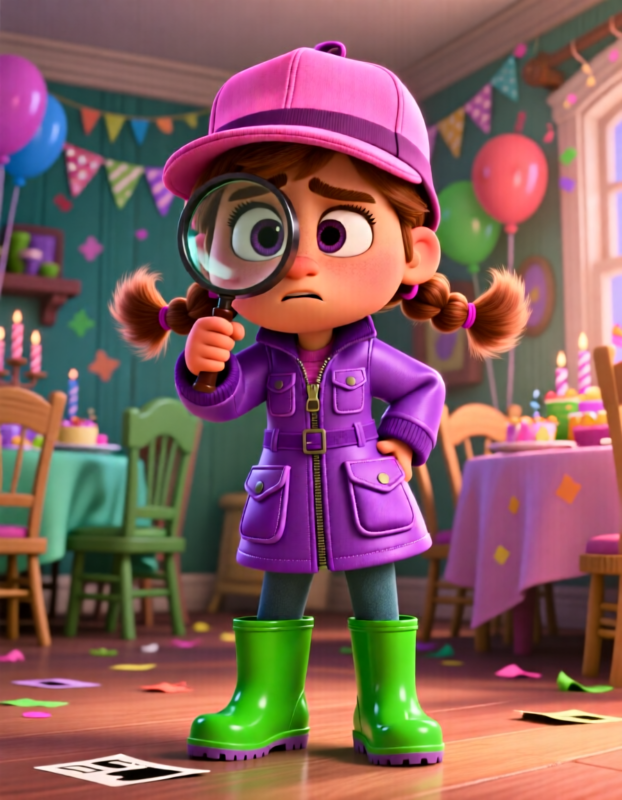
The Power of Narrative in Early Childhood
Between the ages of 5 and 7, a child’s brain undergoes a massive evolutionary leap regarding language acquisition and structural logic. They are moving away from purely associative thinking and beginning to understand cause, effect, timelines, and human motivations. A structured kids’ storybook acts as a safe, predictable sandbox where these newly forming cognitive structures can be tested and strengthened.
Stories provide a scaffolding for understanding the wider world. When a book presents a relatable, high-stakes crisis—such as a missing birthday cake right before a party—it mirrors the emotional gravity that children experience in their day-to-day lives while keeping the atmosphere light-hearted, safe, and wildly entertaining.
Why “The Case of the Lost Birthday Cake” Captivates Young Readers
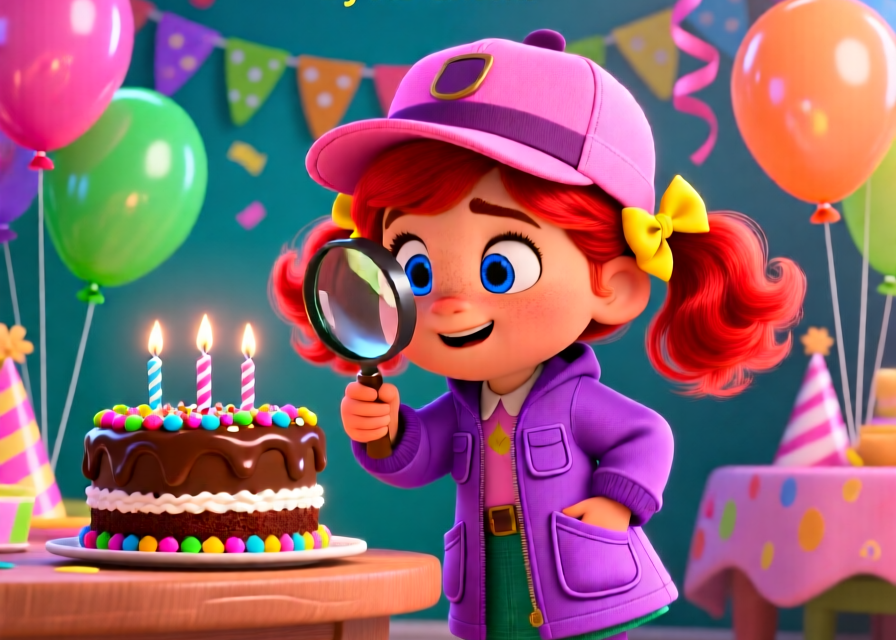
So, what makes The Case of the Lost Birthday Cake stand out in a sea of children’s literature? It masterfully utilises the “whodunit” framework to keep young minds leaning forward. The premise is instantly understandable and highly urgent to a child: a gorgeous, frosted birthday cake has gone completely missing right before a celebration!
   [ The Mystery Blueprint ]

      The Crisis: Cake Vanishes!
                │
                ▼
      The Clues: Crumbs & Pawprints
                │
                ▼
      The Suspects: The Quirky Guests
                │
                ▼
      The Solution: Case Cracked!
Led by a relatable young protagonist named Maya and her dog Barnaby, young readers are given an immediate entry point into the story. They aren’t just observing Maya solve a puzzle; they are actively gathering clues alongside her. Whether it is spotting a stray crumb trail in the corner of an illustration or noticing a slightly guilty look on a character’s face, this specific kids’ storybook rewards children for paying close attention, converting reading from a spectator sport into an immersive mental exercise.
Cognitive Benefits of Mystery Books for Ages 5–7
Choosing the right literature for your child can feel overwhelming, but looking at the cognitive benefits simplifies the choice. If you are looking to expand your digital or physical library with high-quality options, you can explore excellent children’s titles by visiting the TechDhami Marketplace.
Let’s break down the specific neurological and developmental muscles that a mystery-focused kids’ storybook flexes:
1. Enhancing Critical Thinking and Deductive Reasoning
Deductive reasoning is the ability to take general rules or observed facts and logically narrow them down to a specific conclusion. When a child reads The Case of the Lost Birthday Cake, they learn to filter out irrelevant data and focus on what matters. If the suspect has blue frosting on their fingers and the missing cake had pink frosting, a young mind learns to think, “Aha! That person might be innocent, or maybe they are involved in a completely different mischief!”
2. Building Attention to Detail and Visual Literacy
In early childhood education, visual literacy—the ability to interpret, negotiate, and make meaning from information presented in the form of images—is just as vital as textual literacy. A well-designed kids’ storybook integrates clues directly into its artwork. Children naturally slow down their pacing to scan the background, inspect the characters’ clothing, and analyse facial expressions, which vastly improves their overall attention span and focus.
3. Developing Working Memory
To solve a mystery, a reader must remember what happened on page three while they are looking at page twelve. They must hold the list of suspects, motives, and physical clues in their working memory. This structural exercise builds a stronger mental retention capacity, which directly benefits their future performance in subjects like mathematics, reading comprehension, and science.

Tips for Parents: How to Interactive-Read a Mystery Book
To truly unlock the magic of a mystery kids’ storybook, parents should move away from the traditional “monologue” style of reading aloud. Instead, embrace a method called dialogic reading. This simply means having a dynamic, two-way conversation with your child about the book while you read it together.
Here is a quick framework you can use during your next reading session:
| Strategy | What to Do / Say | Developmental Purpose |
| Predictive Pausing | Stop right before a major clue is revealed. Ask, “What do you think Maya will find behind that door?” | Boosts predictive logic and imagination. |
| Evidence Gathering | Point to an illustration. Ask, “Do you see anything unusual or sneaky hiding in this kitchen?” | Sharpens visual scanning and focus. |
| Motive Analysis | Ask, “Why do you think Uncle Bob looks so nervous in this picture?” | Builds emotional intelligence and empathy. |
By treating the storybook as a collaborative playground, you keep your child actively engaged, preventing them from zoning out or losing interest halfway through.

Practical Use Cases for Educators and Parents
A high-quality kids’ storybook like The Case of the Lost Birthday Cake isn’t just limited to nighttime reading in bed. Its structured, interactive nature makes it an incredibly versatile tool across multiple environments:
-
Classroom Read-Alouds: Teachers can use the book to introduce basic narrative concepts such as plot structure, character arcs, setting, and conflict resolution.
-
Speech and Language Therapy: The descriptive clues and conversational interviews within the story provide excellent prompts for practising expressive language, articulation, and sentence structure.
-
Rainy Day Activities: Turn the book into a living game! After reading the story, parents can set up a real-life mini-mystery around the house with written clues leading to a fun, healthy snack.
-
Independent Reading Milestones: Because the plot is driven by high-action suspense, early readers who are just beginning to tackle full sentences are highly motivated to keep reading independently to find out the answer to the mystery.
If you are a teacher or a parent looking to stock up on engaging educational materials, check out the collection available at the TechDhami Curated Shop for various learning assets.
Frequently Asked Questions (FAQs)
Is a mystery kids’ storybook too complex for a 5-year-old?
Not at all! While complex adult thrillers are obviously out of the question, an age-appropriate mystery like The Case of the Lost Birthday Cake uses simple, linear progression. The mystery is grounded in a concept they understand perfectly (a birthday party and cake), ensuring they stay grounded in the plot without feeling overwhelmed or confused.
Will my child lose interest in the book once they know who the culprit is?
Surprisingly, no. Children in the 5–7 age bracket absolutely love repetition. Once they know the ending, rereading the book gives them a sense of mastery and confidence. They will delight in pointing out the clues they missed the first time, proudly proclaiming, “Look, Mom! There’s the footprint! I see it now!”
How does this book help with reading comprehension?
Reading comprehension relies heavily on making inferences—reading between the lines to understand things that aren’t explicitly stated in the text. Mystery stories are essentially giant inference puzzles, making them the single best tool for naturally teaching this advanced comprehension skill to young minds.
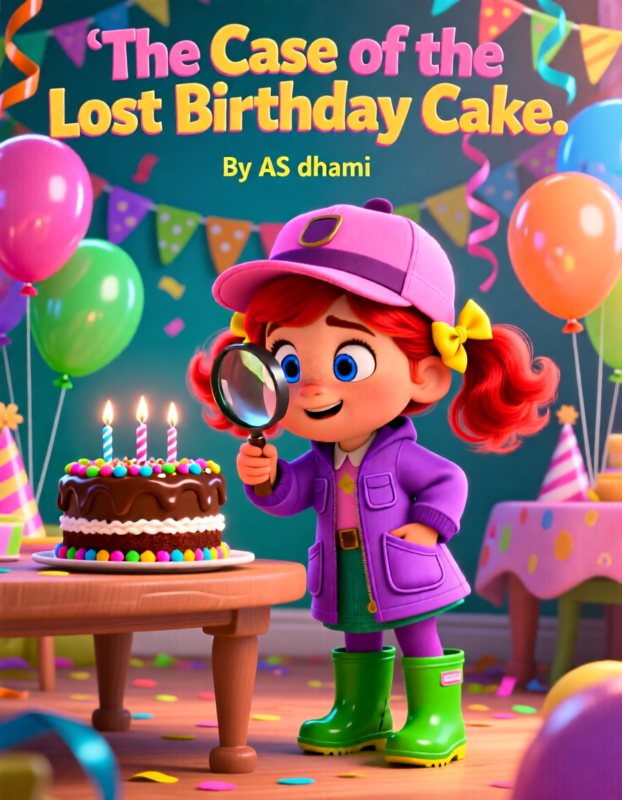
Recommendations for Expanding Your Child’s Reading Journey
If your little reader falls in love with The Case of the Lost Birthday Cake, you should absolutely feed that literary fire. Look for additional books that feature recurring kid-detective characters, interactive puzzle-solving pages, or choosing-your-own-adventure mechanics.
Building a diverse home library filled with vibrant, text-rich, and interactive elements ensures that your child views reading as a joyful, adventurous hobby rather than a tedious school chore. For an incredible, handpicked selection of top-tier children’s books, digital media, and learning aids, make sure to browse through the extensive catalogue at the TechDhami DigitalShopfront.
Conclusion: Empowering Your Little Detective
In a world increasingly dominated by passive, fast-paced digital screens, finding a kids’ storybook that can completely captivate a child’s attention while stimulating their intellect is a true parenting victory. The Case of the Lost Birthday Cake does exactly that. By blending a light-hearted, high-stakes neighbourhood mystery with lovable characters and rich, interactive storytelling, it turns young readers into active investigators.
Through tracking clues, analysing suspects, and celebrating the sweet taste of a solved case, your child will develop foundational critical thinking, memory retention, and language skills that will serve them for a lifetime. So, dim the overhead lights, turn on a cosy reading lamp, open up this delightful kids’ storybook, and get ready to solve the crime of the century together!