Beyond “Go to Sleep”.
Every parent knows the familiar, exhausting choreography of the bedtime stall. “Just one more glass of water.” “My blanket feels funny.” “There’s a weird shadow by my closet.”
For young children, the transition from a bright, active day to a dark, quiet room can be genuinely jarring. Nighttime anxiety isn’t just a clever tactic to stay up late; it is a natural developmental response to separation, a quiet environment, and an overactive imagination running wild in the dark.
But what if you could transform that stressful hour into a magical launching pad for both emotional comfort and scientific wonder?
Choosing the right kind of book—specifically interactive bedtime stories for kids that blend emotional reassurance with natural mysteries, like the changing lunar cycle—can completely reshape how your child views the night. Here is a deep dive into how intentional storytelling can conquer bedtime fears, foster a love for astronomy, and help your little one drift off to sleep without the struggle.
Why the Night Feels Scary to Young Minds
To understand why books about the night sky are so effective, we first have to look at what happens when the bedroom lights go out.
Between the ages of two and six, a child’s imagination explodes. They are learning to create complex scenarios in their minds, but they haven’t yet mastered the boundary between fantasy and reality. In a dimly lit room, a coat on a chair easily becomes a monster. The silence amplifies the house’s creaking.
Furthermore, kids thrive on consistency. When they look out the window and see the moon is a bright, full circle one night and a tiny, sharp sliver a week later, it can feel unsettling. To an adult, it’s just orbital mechanics. To a four-year-old, it looks like a vital piece of their nighttime comfort system is slowly disappearing.
When we use storytelling to address these shifts in nature directly, we take away the fear of the unknown. We replace a vague, dark void with a predictable, friendly sky.
The Power of Framing Science as a Bedtime Friend
There is a common misconception that educational books belong in the classroom and comforting books belong in the bed. But the two concepts actually make incredible partners.
When you introduce a concept like the lunar cycle through a lyrical narrative, you are leveraging a psychological tool called “reframing”. You are taking a potentially intimidating or confusing natural event and wrapping it in a warm blanket of story.
Transforming the Moon into a Predictable Constant
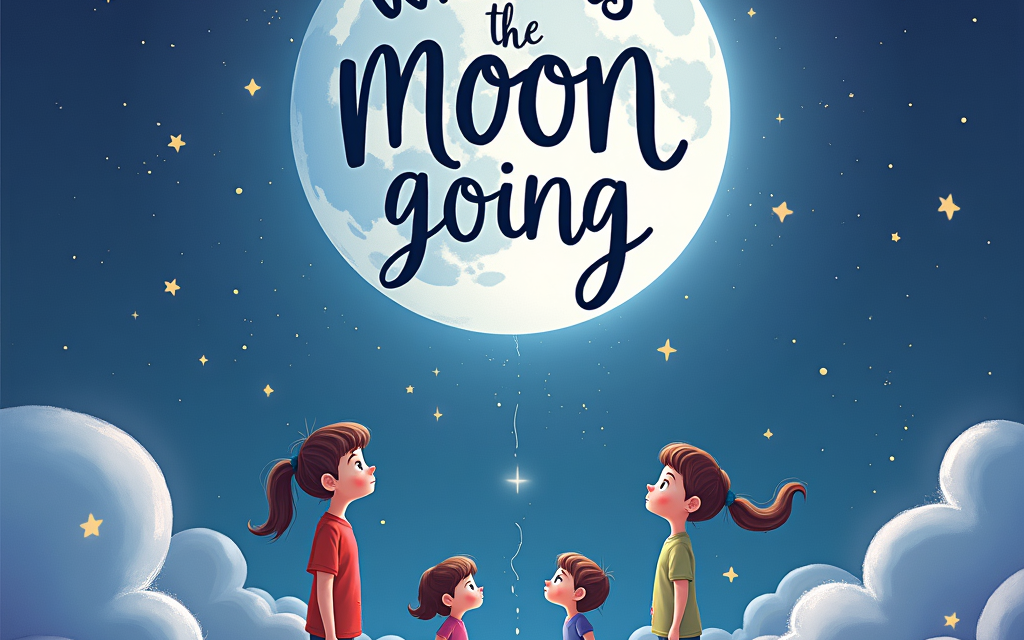
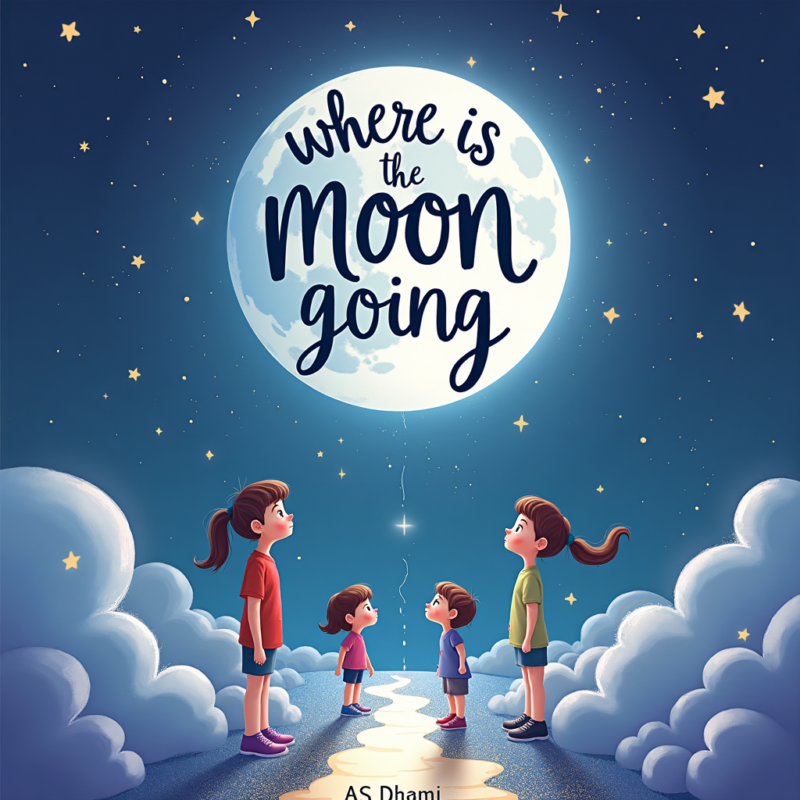
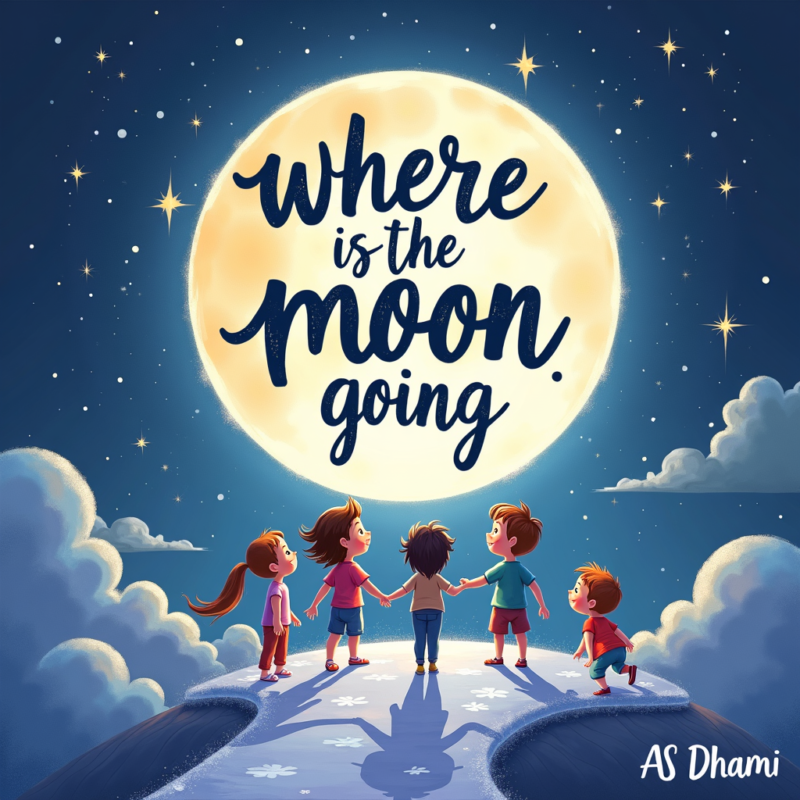
In stories like Where Is the Moon Going?, the moon isn’t a cold, distant rock moving through a vacuum. It is a gentle companion playing a cosmic game of hide-and-seek. By learning that the moon changes shapes on purpose—and, crucially, that it always returns to be big and bright again—children learn a profound lesson about permanence.
This understanding of cycles offers immense emotional security. It tells the child: Just like the moon disappears and comes back, the sun will come back tomorrow, and Mommy or Daddy will be right here when you wake up.
Igniting the Spark of STEM Early
You don’t need a telescope or a dense textbook to raise a future scientist. You just need to validate their natural observations. When children see their own daytime or nighttime questions reflected in a book, they learn that their curiosity has value.
Noticing that the moon “follows” your car or changes its shape over three weeks is a child’s first real foray into scientific observation. Bedtime stories that embrace these questions build a bridge between emotional comfort and cognitive development.
4 Practical Tips to Turn Bedtime Reading Into a Calming Ritual
Simply reading the words on a page is a great start, but you can maximise the soothing, interactive power of a bedtime story with a few simple adjustments to your routine.
-
Practice “Paced Lowering” of Your Voice: As you get closer to the end of the book, intentionally slow down your reading speed and lower your volume. Your child will naturally mimic your calm energy and quiet down to hear you.
-
Connect the Book to the Real Window: Before you open the book, take thirty seconds to look out the window together. Ask, “What shape is our friend tonight?” This grounds the story in reality and gives them a comforting visual to look at if they wake up in the middle of the night.
-
Let Them Trace the Pages: Use books with large, clear illustrations of the moon or stars. Encourage your child to physically trace the shape of the crescent or full moon with their finger. This tactile interaction acts as a grounding exercise, pulling their focus away from racing thoughts or anxieties.
-
Create a Shared Bedtime Catchphrase: End the reading session with a consistent, reassuring phrase inspired by the book. Something like, “The moon is watching over the yard, and I am watching over you. Goodnight.”
The Anatomy of a Perfect Bedtime Book
Not all children’s books are created equal when it comes to winding down. A high-energy, comedic book filled with bright neon colours and frantic pacing is perfect for a rainy Tuesday afternoon, but it can backfire spectacularly at 8:00 PM.
When looking for interactive bedtime stories for kids that soothe them to sleep, check for these three essential elements:
| Element | What to Look For | Why It Matters |
| Color Palette | Soft blues, deep indigos, muted purples, and warm glows. | Mimics the natural shift into twilight, triggering melatonin production and psychological readiness for sleep. |
| Rhythm & Rhyme | Metered prose or soft, predictable rhymes that roll off the tongue. | Acts like a verbal lullaby. The cadence lowers the heart rate and creates a hypnotic, soothing environment. |
| Narrative Arc | A problem that resolves into safety, comfort, and a return to home or bed. | It assures the child’s brain that the “adventure” is safely over, signalling that it is officially time to rest. |
Frequently Asked Questions
How can I use a moon book to help with a child’s fear of the dark?
Use the book to change the narrative of what the dark represents. Instead of focusing on what might be hiding in the shadows, focus on the stars, the soft moonlight, and how nocturnal animals are tucked into their cosy homes. Emphasise that the dark is simply the world’s way of putting on a heavy, quiet blanket so everything can rest and grow.
My child is only two. Are science-based bedtime stories too advanced?
Not at all! At age two, they won’t grasp the concept of gravitational pull or axial tilt, nor should they. However, they absolutely can grasp patterns, shapes, and vocabulary. Hearing words like “crescent”, “glow”, and “orbit” paired with beautiful images builds language pathways and familiarises them with the natural world long before they encounter it in a classroom.
What should I do if my child wants to read the same moon book every single night?
Lean into it! While it can feel repetitive for parents, children crave repetition because it provides a profound sense of safety. They know exactly what is coming next on every page, meaning their brains don’t have to stay alert or surprised. That absolute predictability is exactly what allows an anxious mind to let go and fall asleep.
Conclusion: Turning Out the Lights with Confidence
At its core, a book like Where Is the Moon Going? is more than just text and ink on paper. It is an emotional toolkit disguised as an adventure. By addressing a child’s unspoken anxiety about the changing, darkening world around them and turning it into a beautiful, predictable cycle, we do more than just get them to close their eyes.
We teach them that the dark holds wonder instead of terror. We teach them that asking questions about the sky is the beginning of a grand adventure. And most importantly, we send them to sleep wrapped in the ultimate comfort: the knowledge that the world is an orderly, beautiful place and that morning is always on its way.