Getting a child to put down a tablet and pick up a book can sometimes feel like a minor battle. We’ve all been there: you open a beautifully written story, only for your child’s eyes to wander toward the nearest screen within five minutes. Kids today are used to dynamic, responsive environments. Traditional, static text can struggle to compete with that level of sensory engagement.
But what if a book could offer that same sense of active involvement without a single glowing screen in sight?
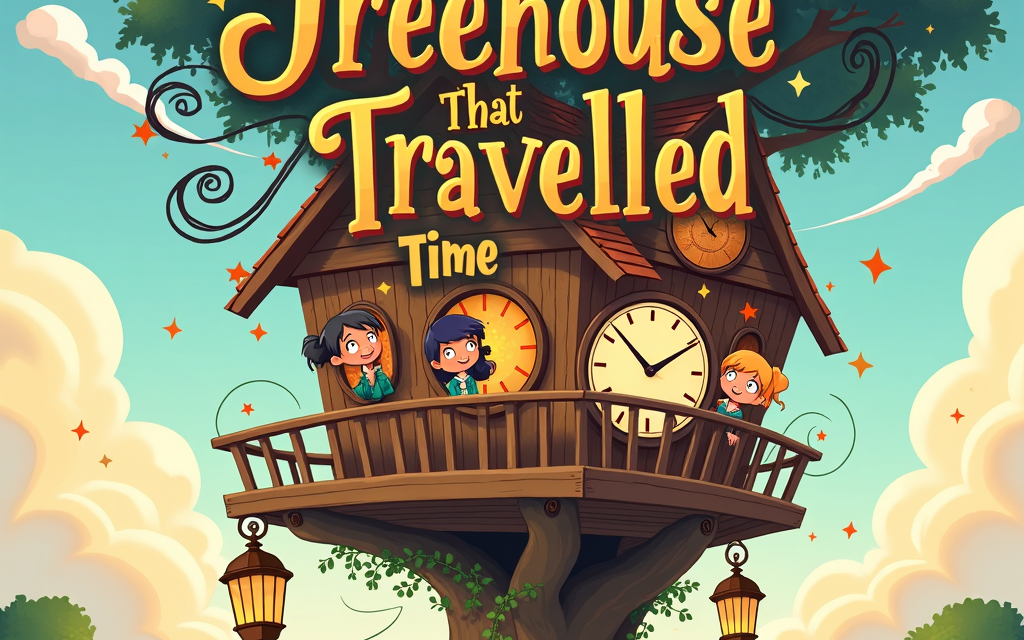
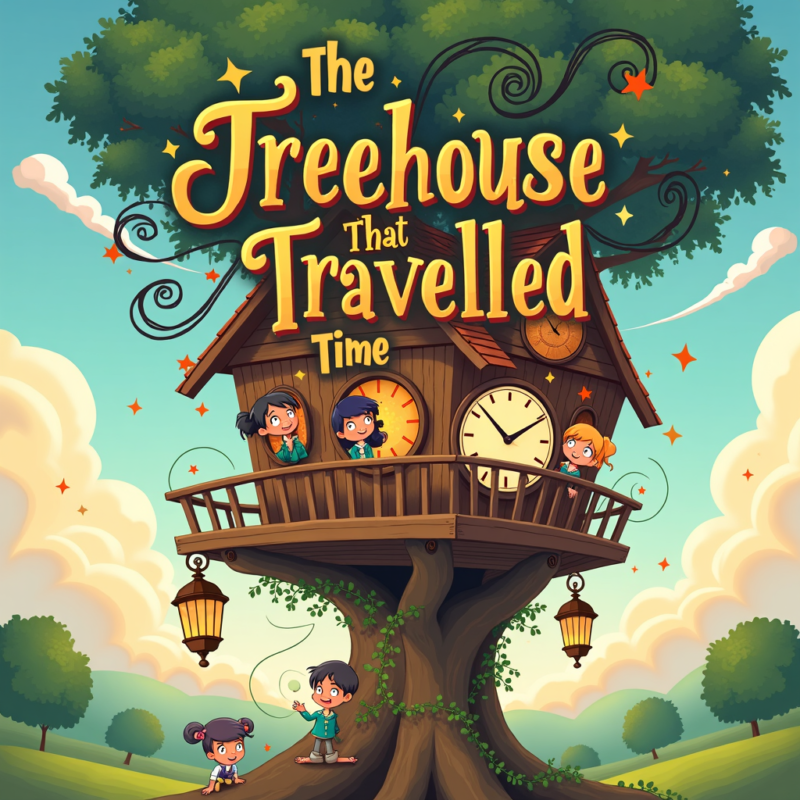
Enter interactive storybooks for kids. These aren’t just books your children read; they are worlds your children participate in. A prime example of this magic is the new release, The Treehouse That Travelled Time, a book that transforms historical education into a living, breathing choose-your-own-adventure mystery.
Let’s dive into why interactive reading is booming, how it supercharges a child’s brain development, and why a time-travelling backyard treehouse might just be the secret weapon your bedtime routine is missing.
What Exactly Is an Interactive Storybook?
When many parents hear the word “interactive,” they immediately think of apps or digital ebooks with noisy sound effects. While those exist, physical interactive books take a much more tactile and imaginative approach.
An interactive book invites the reader to become a co-author or a character in the plot. It might ask them to:
-
Solve a visual puzzle to unlock the next chapter.
-
Make a choice on page 14 that sends them hunting for clues on page 32.
-
Locate hidden historical items tucked away inside detailed illustrations.
In The Treehouse That Travelled Time, for instance, readers don’t just read about the siblings Leo and Maya going to ancient Egypt—they actively help them decode a hieroglyphic message on a tomb wall to find the missing gear for their time-travelling pocket watch. If the reader solves it incorrectly, the kids might take a accidental detour to medieval Europe!
The Hidden Cognitive Benefits of Active Reading
When a child reads passively, they absorb information. When they read interactively, their brains light up like a Christmas tree. By pairing standard literacy with decision-making and problem-solving, interactive books offer massive cognitive advantages.
1. Boosts Critical Thinking and Executive Function
Every time a book asks a child, “What should Leo and Maya do next?” it forces them to calculate risk and predict outcomes. They have to weigh choices: Should we trust the mysterious Viking captain, or should we hide the time-travel watch in the forest? This builds real-world problem-solving skills and encourages kids to think two steps ahead.
2. Increases Reading Comprehension
It’s easy for a kid to skim words on a page without actually absorbing the plot. But when the text requires them to know exactly why a character is running away in order to solve a riddle at the end of the page, skimming is out the window. They have to pay attention to details, retaining information much more effectively.
3. Fosters “Stealth Learning” (STEM and History)
Kids often push back against heavy historical facts or rigid science lessons. However, if those facts are wrapped inside a high-stakes survival story, they devour them. Learning that the Industrial Revolution changed manufacturing becomes unforgettable when you are actively helping an inventor fix a steam engine before a rogue time-loop closes!
Meet the Adventure: The Treehouse That Travelled Time
To understand how this looks in practice, let’s take a look under the hood of The Treehouse That Travelled Time.
The core story revolves around two ordinary kids who find an extraordinary secret in their backyard. Their grandfather left behind a rickety wooden treehouse, but it’s anchored to a mysterious clockwork mechanism. When they accidentally turn the main dial, the backyard vanishes, replaced by the primeval jungle of prehistoric Earth.
                  [ The Treehouse Clock Activates ]
                                  |
         +------------------------+------------------------+
         |                                                 |
[Choice A: Cretaceous Era]                        [Choice B: Ancient Egypt]
 - Dodge a Triceratops                             - Decode Hieroglyphics
 - Hunt for the copper gear                        - Find the hidden pharaoh tomb
The magic of this specific book is its structural layout. It doesn’t follow a straight line. It splits, twists, and loops back on itself, offering young readers a completely fresh experience every time they pick it up.
Practical Ways to Use Interactive Books at Home
If you want to maximize the impact of books like The Treehouse That Travelled Time, try these simple strategies during family reading sessions:
-
Roleplay the Dilemmas: When the story reaches a fork in the road, don’t just vote on what to do. Have your child argue why their choice is the best option. It’s a fantastic way to develop verbal reasoning.
-
The “Spot the Mistake” Game: Because the characters travel through time, certain eras have deliberate historical anomalies hidden in the drawings (like a Roman gladiator accidentally wearing a digital wristwatch). Challenge your child to spot them.
-
Keep an Adventure Journal: Let your kid write down the “timeline” of their choices. If they get stuck in a bad timeline or a dead-end, they can look at their journal, track where they went wrong, and restart their journey from a previous decision point.
Frequently Asked Questions
What age group is this book best for?
While interactive books come in all shapes, The Treehouse That Travelled Time is fine-tuned for kids aged 6 to 11. Younger children (6-8) will love doing it as a read-aloud journey with a parent, while older children (9-11) can easily tackle the puzzles and branching paths on their own.
Does this book encourage re-reading?
Absolutely. Traditional stories usually lose their spark once a child knows the ending. Interactive books are built to be read multiple times because a single read-through only exposes about 40% of the actual content and historical eras hidden inside the volume.
Is it aligned with educational school curricula?
Yes! While it reads like a fast-paced fantasy adventure, the historical settings—including ancient Rome, the Aztec Empire, and early space exploration—are researched to introduce kids to key historical milestones and cultural concepts found in elementary school curricula.
Conclusion: Give Your Child the Key to Time Travel
At the end of the day, our main goal as parents and educators is simply to make kids fall in love with the process of reading. We want them to see books not as a chore or a piece of homework, but as a portal to somewhere spectacular.
By transforming your child from a spectator into a time-travelling explorer, The Treehouse That Travelled Time provides exactly that spark. It turns reading time into an unforgettable game of exploration, logic, and imagination. Dust off the gears, open up the trapdoor, and get ready to see where the wind takes your treehouse tonight.