As parents, educators, and carers, we have all been there. One minute your child is happily playing with their blocks, and the next, a minor setback triggers a full-blown emotional storm. Tears flow, tiny fists clench, and the world seems to hang in the balance.
For a young child, big emotions like anger, sadness, anxiety, and frustration don’t just feel like fleeting moments—they feel like entire weather systems.
Navigating these intense feelings can be incredibly overwhelming for children. Because their prefrontal cortex (the part of the brain responsible for logic and emotional regulation) is still developing, they literally do not possess the biological tools to say, “I am feeling overwhelmed by this transition right now, and I need a moment to process it.” Instead, they show us through their behaviour.
So, how do we guide them through these turbulent emotional landscapes without losing our own calm? One of the most powerful, time-tested tools at our disposal is storytelling. By using narrative, metaphor, and relatable characters, we can demystify complex feelings and hand children the tools they need to find their inner calm.

Why Big Emotions Feel So Big for Little People
To understand how to help children handle big emotions, we first need to look at the world through their eyes. To a five-year-old, a change in routine—like leaving the playground, starting a new school year, or moving to a new bedroom—can feel like a threat to their safety and stability.
Children thrive on predictability. When a transition occurs, it disrupts their sense of control. This disruption often manifests as stubbornness, tantrums, or complete withdrawal.
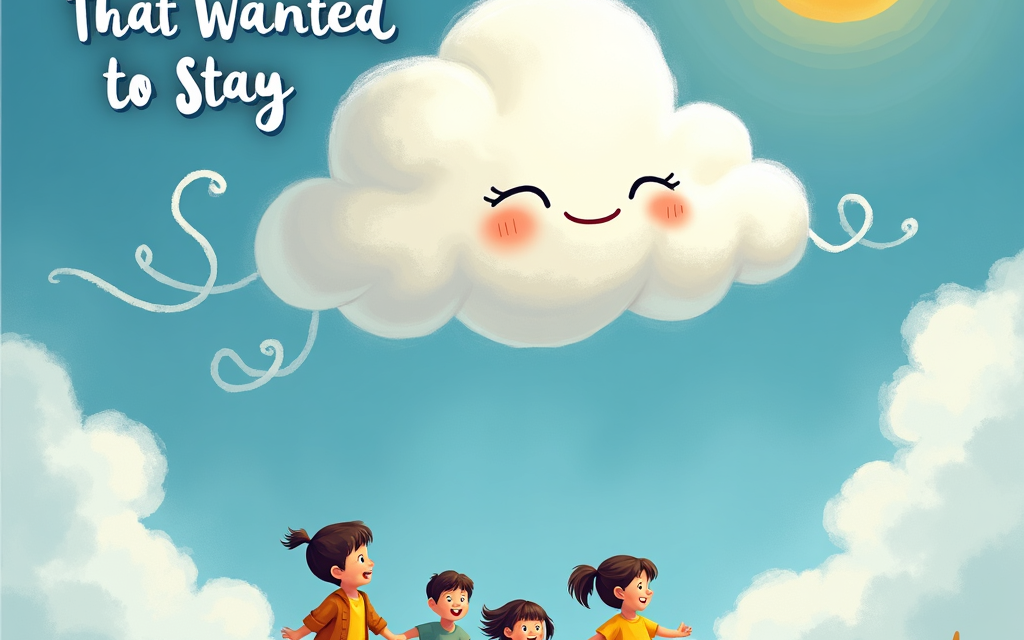
When a child resists a change, they aren’t necessarily trying to be difficult. Often, they are simply acting like a little cloud that wants to stay exactly where it is, terrified of what will happen if the wind blows them into unfamiliar territory. Valuing and validating that fear is the very first step toward helping them move through it.
The Power of Bibliotherapy: Healing Through Stories
Bibliotherapy is a fancy term for a very simple, magical concept: using books and stories to help people solve problems and process difficult emotions. For children, stories act as a safe psychological mirror.
When children read about a character who is experiencing the exact same feelings they are, three incredible things happen:
-
Normalisation: They realise they are not alone. If a character in a book feels scared, angry, or stubborn, then those feelings must be a normal part of the human (or cloud!) experience.
-
Distance: It is much easier for a child to talk about why a character is sad than it is to talk about why they are sad. This externalisation creates a safe space for dialogue.
-
Modelling: Children watch how characters navigate their struggles, try new coping mechanisms, and ultimately survive the emotional storm. They internalise these lessons and apply them to their own lives.
Practical Strategies to Help Kids Navigate Emotional Transitions
Storytime is a fantastic foundation, but how do we bridge the gap between the pages of a book and real-life emotional meltdowns? Here are several practical, actionable strategies you can implement today to build your child’s emotional intelligence.
1. Name It to Tame It
Coined by psychiatrist Dr Dan Siegel, “naming it to tame it” is the practice of identifying and labelling an emotion out loud. When a child is in the middle of a tantrum, their emotional brain is firing on all cylinders. By labelling the emotion, you help activate their logical brain.
-
What to say: “I can see that you are feeling really frustrated right now because we have to leave the park. It’s hard to stop playing when you’re having fun.”
-
Why it works: It validates their experience without judgement, making them feel heard and safe.
2. Use Visual Metaphors (The Weather Method)
Children are highly visual thinkers. Comparing emotions to the weather is an incredibly effective way to help them understand that feelings are temporary.
Just like rainstorms, heavy snow, or thick fog, big emotions roll in, dark and heavy, but they always pass eventually. Teaching children that they are the sky, and their emotions are just the weather passing through, gives them a sense of permanence and control.
3. Co-Regulation and Mindful Breathing
When a child is drowning in a big emotion, they cannot catch a lifeline thrown from afar; you have to jump in and swim with them. This is called co-regulation. Your calm brain acts as a thermostat for their chaotic brain.
One of the best ways to co-regulate is through deep, rhythmic breathing. You can make this fun by using playful visualisation:
-
The Flower and the Candle: Tell them to smell the beautiful flower (breathe in deep through the nose) and blow out the birthday candle (breathe out slowly through the mouth).
-
The Floating Cloud: Ask them to imagine breathing in so deeply that their belly expands like a big, fluffy cloud and then slowly letting the air out to blow the cloud across the sky.
+-----------------------------------------------------------------------+
|                 EMOTIONAL REGULATION QUICK-GUIDE                      |
+--------------------------+--------------------------------------------+
| What NOT to Do           | What to Do Instead                         |
+--------------------------+--------------------------------------------+
| "Stop crying, it's not a | "It's okay to cry. I know you're feeling   |
| big deal!"               | really sad right now."                     |
+--------------------------+--------------------------------------------+
| Sending them away to     | Staying close and offering a "calm-down"   |
| their room as punishment | corner filled with books and comfort items.|
+--------------------------+--------------------------------------------+
| Trying to reason during  | Waiting until the storm passes before      |
| a full-blown meltdown.   | discussing what went wrong and why.       |
+--------------------------+--------------------------------------------+
Use Cases: Applying These Tools in Everyday Life
Let’s look at how these emotional tools play out in real-world scenarios that every parent faces.
Scenario A: Starting a New School or Nursery
The night before school starts, your child becomes clingy, tearful, and refuses to pack their school bag. They are experiencing deep transition anxiety.
-
The Storytelling Approach: Read a story about a character facing a big move or a new environment. Focus heavily on how the character felt before the change versus how they felt after.
-
The Action Plan: Draw a small cloud or a heart on your child’s hand and a matching one on your own. Tell them that whenever they press it during the school day, they are sending a “hug” straight to you.
Scenario B: The Tech-Time Transition
It’s time to turn off the tablet, and your child immediately drops to the floor, screaming and refusing to cooperate.
-
The Storytelling Approach: During a calm moment later that day, tell a silly story about a little robot who forgot how to turn off and ran out of battery entirely because he wouldn’t rest.
-
The Action Plan: Give clear, visual countdowns before the transition happens. Use a physical sand timer or a visual clock so they can see the time slipping away, making the transition predictable rather than abrupt.
Recommendations for Creating a “Calm-Down Corner”
If you don’t already have a dedicated space in your home for emotional processing, creating a “Calm-Down Corner” can be a total game-changer. Unlike a traditional “time-out”, which can feel isolating and punitive, a calm-down corner is a safe, cosy sanctuary where children choose to go when they recognise their emotional weather is turning stormy.
Here is what you should include in your space:
-
Comfortable Seating: Lots of soft pillows, a plush beanbag, or a weighted blanket to provide comforting sensory pressure.
-
Sensory Tools: Fidget toys, a snow globe or glitter jar to watch swirl and settle, and stress balls.
-
A Curated Library: Fill a small basket with picture books that focus specifically on feelings, breathing, mindfulness, and resilience.
-
Visual Breathing Prompts: Simple, printed posters showing shapes they can trace with their finger as they breathe in and out (like tracing the outline of a fluffy cloud).
Frequently Asked Questions
Q: At what age can children start understanding their emotions?
Children begin experiencing complex emotions in toddlerhood (around ages 1.5 to 2), but they generally don’t develop the language to identify or understand them until ages 3 or 4. Introducing emotional vocabulary early through picture books lays an invaluable foundation for when they are older.
Q: My child refuses to talk about their feelings. What should I do?
Never force a child to talk about an emotion, especially when they are in the heat of the moment. Instead, use parallel play or storytelling. Read a story about someone else experiencing that feeling, or use puppets and stuffed animals to act out a similar situation. Often, children will project their own feelings onto their toys, making it easier to share.
Q: Is it bad to let my child see me get angry or sad?
Not at all! In fact, it is incredibly healthy for children to see adults experience a full range of emotions, provided we model healthy ways to cope with them. If you lose your temper, apologise and label it: “I am feeling very overwhelmed right now, so I am going to take three deep breaths to help myself calm down.” This is live-action emotional modelling.
Q: How long do these emotional phases usually last?
Childhood development occurs in leaps and bounds. Intense emotional phases often coincide with major developmental milestones, growth spurts, or lifestyle shifts (like moving, starting school, or a new sibling arriving). With consistent, empathetic support, these rocky periods typically smooth out over a few weeks or months.
Conclusion: Embracing the Rain So the Flowers Can Grow
At the end of the day, our goal as parents and mentors isn’t to banish the rainclouds from our children’s lives. We cannot prevent them from ever feeling sad, anxious, angry, or stubborn—nor should we want to. Every single emotion serves a vital purpose in their psychological growth. Sadness teaches empathy, anger establishes boundaries, and anxiety teaches caution.
Instead, our job is to hand them an umbrella.
By utilising the power of storytelling, validating their internal experiences, and practising mindfulness tools together, we teach our children that they are strong enough to weather any storm that comes their way. The next time your little one is holding on tight, resisting the wind of change, wrap them in a hug, open up a comforting book, and remind them that sometimes, letting go is exactly how we discover how beautifully we can fly.