Why Detective Books for Kids Are the Ultimate Reading Superfood
Have you ever watched a child track a line of ants across the sidewalk or spend twenty minutes figuring out exactly where you hid the stray puzzle piece? Children are natural-born detectives. They view the world as a giant, unfolding mystery waiting to be solved. From the moment they learn to ask “why?”, their brains are hardwired to look for clues, patterns, and answers.
As parents and educators, one of our greatest opportunities is to channel that innate curiosity into a lifelong love for reading. But in a world dominated by fast-paced tablets and flashing screens, catching a child’s attention with a traditional book can sometimes feel like an uphill battle.
Enter the magical world of detective books for kids.
Mystery stories do something that standard narratives often miss: they transform reading from a passive activity into an active, collaborative game. Instead of just sitting back and listening to a story, the child becomes the main character’s sidekick. When a book challenges a young reader to crack a code or find a hidden object, the screen time cravings melt away, replaced by the thrill of the chase.
Today, we’re diving deep into how mystery books shape growing minds, exploring practical tips to make reading time more engaging, and introducing a brilliant new furry investigator who is ready to steal your child’s heart: Professor Paws.
The Secret Benefits of Mystery Stories for Young Minds
When we think of children’s books, we often think of sweet bedtime fables or simple counting rhymes. While those have an important place on the bookshelf, mystery books offer a unique suite of cognitive benefits that act like a workout for your child’s developing brain.
1. Boosting Deductive Reasoning and Critical Thinking
At its core, a mystery is a logic puzzle wrapped in a story. When children read about a missing item or a strange occurrence, their brains immediately go to work sorting through information. They learn to separate the “noise” from the actual evidence.
For example, if a character has muddy paws and the crime scene features muddy footprints, a child learns to connect cause and effect. This foundational logic is the exact same skill set used later in life for scientific inquiry, mathematical problem-solving, and computer coding.
2. Enhancing Attention to Detail and Visual Literacy
Many modern detective books for kids rely heavily on visual storytelling. It’s not just about the words on the page; it’s about what is hidden in the background art.
When a story asks, “Can you find where the thief dropped the key?”, children must slow down and scan the page methodically. This builds visual literacy—the ability to interpret and make sense of information presented in images. In an era of rapid digital scrolling, teaching kids the patience to look closely at a single image is a true superpower.
3. Expanding Vocabulary Through Context Clues
Mystery books introduce a wonderful treasure trove of unique words. Young readers will encounter terms like suspect, alibi, evidence, deduction, motive, and investigate.
Because these words are tied directly to an exciting plot point, children don’t just memorise definitions; they understand them through context. Learning vocabulary becomes an organic byproduct of trying to figure out “whodunit”.
Introducing a New Hero: Professor Paws and the Missing Bone
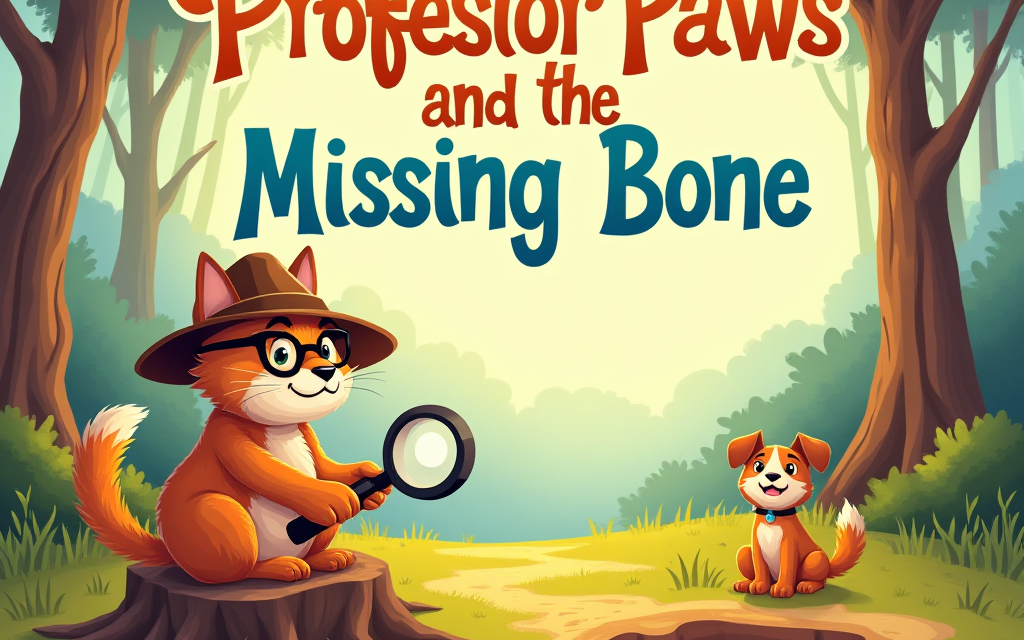
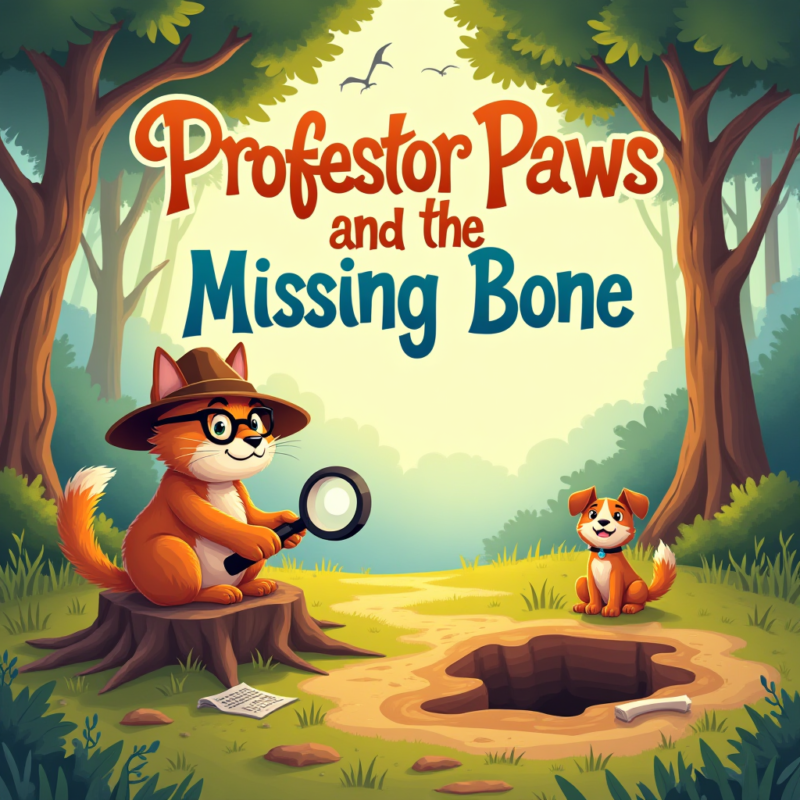
If you’re looking for the perfect entry point into this genre, look no further than the whimsical streets of Dogtown. We are incredibly excited to introduce Professor Paws and the Missing Bone, an interactive mystery storybook designed to captivate readers aged 4 to 8.
       /\_/\
      ( o.o )   "The game is afoot, human friends!"
       > ^ <
The Storyline: The Case of the Grand Bark Museum
Professor Paws isn’t your average hound. Clad in a dapper tweed jacket and armed with a trusty brass magnifying glass, he is the city’s premier private investigator. He prefers a nice cup of chamomile tea and a good data set over chasing mail trucks.
The drama begins on the eve of the annual Pet Gala. The centrepiece of the entire event—the priceless, ancient Golden Bone—has vanished from its glass display case at the Grand Bark Museum. The only clues left behind are a faint scent of peppermint, a scrap of red yarn, and a trail of mysterious, looping pawprints.
With the chief of police totally stumped, Professor Paws is called in to save the day. But he can’t do it alone. He needs the sharp eyes of your little reader to help him scour the museum, interview the local pets, and track down the missing treasure before the gala doors open.
Meet the Suspects
As Professor Paws digs deeper into the case, he encounters a colourful cast of characters, each with their own suspicious behaviour:
-
Barnaby the British Shorthair: A sophisticated cat who loves knitting with red yarn but claims he was napping during the heist.
-
Penelope the Poodle: A high-fashion pup who loves peppermint treats and was seen admiring the display just hours before it disappeared.
-
Spike the Bulldog: The gruff museum security guard who might have accidentally slept through his shift.
Each character presents a riddle or a small puzzle that the reader must solve alongside Professor Paws to determine if they are telling the truth or spinning a tall tale.
How to Turn Storytime into an Interactive Detective Adventure
To get the most out of detective books for kids, you don’t just want to read the words straight through. Try transforming your living room into a mini detective headquarters. Here are a few practical tips to elevate your next reading session:
Create a “detective kit”.
Before you crack open Professor Paws and the Missing Bone, hand your child a few simple tools. A cheap plastic magnifying glass, a small notebook, and a pencil can completely change their mindset. Tell them they are the professor’s official junior deputy. As you read, encourage them to jot down drawings of clues or check off suspects as they are cleared of suspicion.
Pause and Predict
Resist the urge to rush to the next page to find out what happens. Instead, lean into the cliffhangers. Pause at critical moments and ask open-ended questions:
-
“Based on what Barnaby just said, do you think he’s telling the truth?”
-
“Look at the window in this drawing. Do you see anything unusual that the professor might have missed?”
-
“What do you think our next move should be?”
This practice keeps kids actively engaged and exercises their working memory as they recall details from earlier in the book.
Act Out the Interrogations
Use fun voices for the different suspects! Let your child play the role of Professor Paws, asking the questions in their best serious detective voice, while you play the nervous suspects. Bringing the characters to life through dramatic play enhances reading comprehension and makes the experience incredibly memorable.
What Makes an Excellent Interactive Children’s Book?
With hundreds of choices on the market, it helps to know what sets a truly great interactive book apart from the rest. When shopping for detective books for kids, look for these three pillars of quality:
| Feature | What It Looks Like | Why It Matters |
| High Visual Density | Intricate illustrations with hidden details, background jokes, and subtle clues. | Encourages repeat readings; kids find something new every single time. |
| Balanced Difficulty | Riddles that challenge the mind without causing immense frustration. | Keeps confidence high while still promoting problem-solving skills. |
| Tactile Elements | Sturdy flaps, textured surfaces, or punch-out clue cards. | Keeps kinaesthetic learners engaged who might otherwise fidget and lose focus. |
Professor Paws and the Missing Bone was crafted specifically with these pillars in mind. The text uses a rhythmic, rhyming structure that aids phonics development, while the artwork features hidden layers that ensure the book won’t just be read once and forgotten on a shelf.
Frequently Asked Questions About Mystery Books for Kids
Q: My child is a reluctant reader. Will a mystery book be too difficult for them?
A: Actually, mysteries are often the best remedy for reluctant readers! Because the plot relies on a question that needs answering, children experience a strong narrative drive to keep going. The interactive elements break up long blocks of text, making the reading process feel less intimidating and more like an engaging game.
Q: What is the ideal age range for Professor Paws and the Missing Bone?
A: The book is optimized for children aged 4 to 8. Younger children (4-5) will love listening to the story, hunting for visual clues in the illustrations, and shouting out answers. Older children (6-8) can read the text independently, solve the more complex text-based riddles, and enjoy writing down their deductions.
Q: How can teachers use this book in the classroom?
A: It makes an incredible tool for group reading sessions! Teachers can use it to introduce concepts of logic, predictions, and character motivations. You can even set up a classroom “mystery day” where students search for hidden clues around the room based on the riddles inside the book.
Conclusion: The Adventure Awaits
At the end of the day, the goal of early childhood reading isn’t just about decoding words on a page—it’s about sparking joy, curiosity, and a desire to learn more about the world. A well-written detective book for kids doesn’t hand answers to its audience on a silver platter; it respects their intelligence, challenges their minds, and invites them to be an active part of the journey.
By stepping into the paws of Professor Paws, your child will learn that puzzles are meant to be tackled with patience, clues should be weighed with logic, and reading is one of the greatest adventures a person can embark upon.
So, put on your thinking caps, grab your magnifying glasses, and get ready to help our favourite dapper hound track down the Golden Bone. The game is officially afoot!