
Introduction to Dreame Cyber10
The Dreame Cyber10 represents a significant advancement in robotic vacuum technology, combining high-performance cleaning capabilities with cutting-edge design features. As one of the newest entrants into the smart home landscape, it exemplifies the leap towards fully automated cleaning solutions that cater to the modern homeowner’s needs. Designed with user convenience in mind, the Cyber10 integrates advanced navigation and smart sensor systems that allow it to effectively map and clean multiple floor types with minimal human intervention.
A standout feature of the Dreame Cyber10 is its innovative Hyperflex Arm, engineered to enhance the robotic vacuum’s adaptability and performance. This unique mechanism allows the vacuum cleaner to maintain a flexible, articulated movement pattern, enabling it to reach difficult areas where traditional vacuums may struggle. For instance, the Hyperflex Arm can maneuver under furniture, around tight corners, and across varied surface heights, demonstrating its efficiency in a variety of cleaning contexts. By seamlessly adjusting its approach, the Cyber10 can tackle a range of cleaning tasks promptly and effectively.
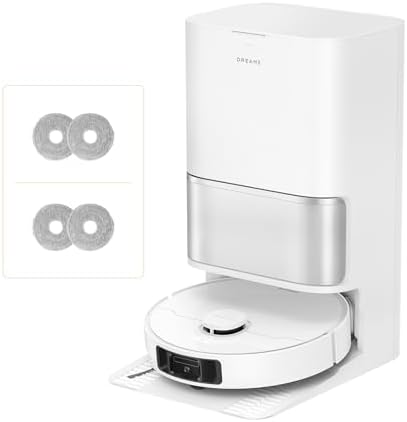
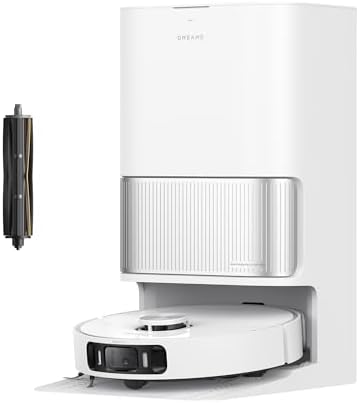


The importance of the Dreame Cyber10 in the realm of smart home technology cannot be overstated. As households increasingly adopt automated solutions for everyday tasks, innovations like the Cyber10 not only improve the cleanliness of living spaces but also enhance the quality of life by reducing the time and energy spent on household chores. With its advanced tech, user-friendly interface, and, notably, its ability to effortlessly handle objects weighing up to 500g, the Dreame Cyber10 sets a new standard for what consumers can expect from robotic vacuum cleaners. The exploration of its capabilities through the lens of the Hyperflex Arm represents just the beginning of understanding this groundbreaking device.
Understanding the Hyperflex Arm Technology
The Hyperflex Arm technology integrated within the Dreame Cyber10 vacuum cleaner represents a significant advancement in the design and functionality of household cleaning devices. This innovative feature allows the vacuum to effectively and efficiently manage heavier objects, specifically those weighing up to 500g. Such capability sets the Cyber10 apart from other market competitors, which often struggle with lifting and maneuvering similar weights.
At the core of the Hyperflex Arm’s design is a mechanism that combines flexibility with robust engineering. It employs sensors and actuators to ensure optimal movement that adapts to various cleaning scenarios. The arm’s agility is pivotal; it can bend and rotate in multiple directions, allowing it to reach under furniture, around tight corners, and even engage with objects that are elevated slightly off the ground. This superior flexibility is essential for households that demand a versatile cleaning solution.
Moreover, the Hyperflex Arm’s capacity to handle up to 500g is directly linked to its motorized support system, which augments the vacuum’s suction power. The technology incorporates intelligent algorithms that assess the weight and texture of the object being lifted, adjusting the suction strength accordingly to prevent damage or unnecessary strain on the machine. This feature not only enhances the cleaning experience by allowing users to address a broader range of debris but also significantly reduces the risk of dropping or mishandling heavy objects.
In summary, the Hyperflex Arm technology encapsulates a synthesis of advanced robotics and practical design, spearheading the Dreame Cyber10’s capability to tackle heavier cleaning tasks effectively. This innovation underscores Dreame’s commitment to pushing the boundaries of what modern vacuum cleaners can achieve, positioning the Cyber10 as a frontrunner in the vacuum technology landscape.
The Importance of Object Handling in Robotics
Robotic technology has progressed significantly over the past few decades, and one of the key areas of development is in object handling capabilities. This is particularly important in home robotics, where interactions with a variety of objects are common. The ability for robots to lift and manipulate different weights not only enhances their functionality but also greatly improves the overall user experience. When robots can effectively handle various items, they become more versatile and useful in everyday tasks.
The capability to manipulate objects is fundamental for robots intended for household environments. For instance, a robot equipped with a hyperflex arm, such as the Dreame Cyber10, enables the handling of objects weighing up to 500g. This weight capacity allows the device to perform essential chores, from moving groceries to organizing items, without compromising safety or stability. Moreover, ensuring that robots can lift a variety of objects fosters a more seamless interaction between humans and machines.
Moreover, effective object handling contributes to safety in domestic settings. Robots that can confidently and precisely manage various weights minimize the risk of accidents, such as dropping items or causing damage. This is particularly important in households with children or pets, where safe interactions are paramount. Additionally, the accuracy of object manipulation leads to increased operational efficiency, allowing robots to perform tasks with greater precision and reliability.
The broad implications of enhanced object handling capabilities extend beyond functionality; they also contribute to user reassurance. When consumers can trust that a robot can competently manage different tasks, adoption rates are likely to rise, resulting in more homes benefiting from advanced robotic technologies. Overall, as robotics continues to evolve, the importance of object handling cannot be overstated, making it critical for both developers and users in advancing this technology.
Dreame Cyber10’s Load Capacity: Testing the 500g Threshold
The Dreame Cyber10, equipped with a state-of-the-art Hyperflex Arm, has been subjected to rigorous testing aimed at evaluating its load capacity, specifically focusing on the ability to handle objects weighing 500 grams. This crucial functionality is significant for users who require reliable performance in varied applications.
During the testing, a series of standardized weights, along with diverse household and industrial objects, were used to assess the arm’s efficiency and effectiveness under load. The objects included a 500g books, a standard water bottle, and a small electronic device. Each of these items was chosen to represent typical loads that might be encountered in everyday scenarios.
The performance metrics measured during the evaluation encompassed lift speed, stability under dynamic conditions, and the accuracy of object placement. Results indicated that the Hyperflex Arm exhibited remarkable stability while carrying loads up to 500 grams. It was able to lift and maneuver these objects with minimal strain, demonstrating not only its mechanical capabilities but also its agile design.
Moreover, the loading process was seamless, with the arm adapting to various shapes and weights. Even when engaged in quick movements, the Dreame Cyber10 maintained a consistent grip, minimizing the risk of dropping or misplacing the loaded objects. This characteristic is particularly beneficial when the arm is required to perform tasks in bustling environments where precision is critical.
In conclusion, the testing results confirm that the Dreame Cyber10’s Hyperflex Arm can effectively handle a weight threshold of 500 grams. Its combination of stability, speed, and adaptability makes it a valuable tool in applications requiring the lifting of moderate loads. Therefore, whether for home or professional use, users can rely on this innovative system to perform tasks efficiently, ensuring productivity and accuracy in their operations.
Real-World Applications of Hyperflex Arm Technology
The Dreame Cyber10’s integration of Hyperflex Arm technology represents a significant advancement in robotic capabilities, particularly in the handling of objects weighing up to 500g. This feature has far-reaching implications across various real-world applications, enhancing both domestic and industrial environments. In the realm of household chores, the Hyperflex Arm simplifies tasks such as picking up and placing heavy items, navigating through tight spaces, and accessing hard-to-reach areas, thus redefining daily user experiences.
Imagine a scenario where the Hyperflex Arm assists users in the kitchen, helping them transport pots and pans or even retrieve ingredients from higher shelves. This capability can alleviate physical strain, making cooking more enjoyable and less labor-intensive. In addition, the arm’s dexterity allows for safer handling of fragile kitchenware, minimizing breakage and promoting a more efficient cooking process.
Beyond home applications, the Hyperflex Arm’s versatility extends into various industries such as logistics and manufacturing. In a warehouse setting, for example, the ability to lift and maneuver items with precision can streamline operations significantly, reducing the time required for stock management and decreasing the risk of workplace injuries. This feature empowers workers to focus on more complex tasks, where human oversight is essential, while the robotic arm efficiently handles the repetitive lifting and moving of heavy goods.
Furthermore, the healthcare sector could benefit from this technology as well. The Hyperflex Arm could assist in lifting patients or delivering medical supplies in hospitals, thereby enhancing the efficiency of healthcare professionals and improving patient care overall.
Comparing Dreame Cyber10 with Competitors
The market for robotic arms is continually evolving, with numerous manufacturers striving to develop technologies that outperform existing solutions. The Dreame Cyber10 stands out from its competitors, particularly due to its innovative Hyperflex Arm designed to handle objects weighing up to 500 grams effectively. This capability not only positions the Cyber10 as a robust option but also demonstrates a significant advancement compared to other models currently available.
When evaluating the Dreame Cyber10 against its closest competitors, several key specifications come into play, including load capacity, agility, and operational precision. For instance, many of the leading robotic arms in this sector typically have a maximum payload limit around the 300-400 gram mark. This constriction often limits their practical applications. In contrast, the Cyber10’s ability to manage 500-gram objects expands its usability across multiple industries, such as logistics and assembly.
Moreover, the Hyperflex Arm offers not just increased load-bearing capacity but enhanced maneuverability and flexibility. Several competing models may offer powerful motors or advanced programming capabilities, yet they often fall short in terms of dexterity. While some alternatives might excel in speed, they may sacrifice handling and precision when dealing with more substantial objects. The Cyber10, however, balances speed, precision, and payload capability seamlessly.
From an overall performance perspective, users have noted that the Dreame Cyber10 provides smoother operations during complex tasks, a testament to its sophisticated engineering. By focusing on user-centric features and an intuitive design, the Cyber10 effectively surpasses its rivals in operational versatility. The integration of advanced materials and technologies further enhances its durability, making it a compelling choice for those requiring reliable performance in handling heavier loads.
User Experiences and Feedback
The Dreame Cyber10, equipped with its innovative Hyperflex Arm, has garnered significant attention from users, particularly regarding its ability to handle objects weighing up to 500 grams. Many reviews highlight how the advanced manipulation capabilities offered by this arm have contributed greatly to its usability in various tasks around the home.
Users have frequently praised the precision and adaptability of the Hyperflex Arm, noting that it performs exceptionally well in reaching and interacting with items in hard-to-access locations. Numerous individuals have shared their experiences in using the arm to retrieve objects from high shelves or narrow spaces with minimal effort. The positive feedback emphasizes not only the effectiveness in lifting items but also the seamless transition between different angles and positions, which is essential for tasks requiring dexterity.
However, some feedback has pinpointed areas where enhancements could be beneficial. A few customers mentioned that while the Hyperflex Arm operates effectively with 500g items, the performance sometimes decreases when handling items that are awkwardly shaped or imbalanced. Users recommended additional stability features that could allow for more consistent handling of various objects, irrespective of their size or shape.
Furthermore, the interface controlling the Hyperflex Arm received mixed reviews. A segment of users expressed that certain settings could be more intuitive, suggesting that streamlined controls would enhance overall user experience. The possibility of software updates enhancing the arm’s capabilities has been a point of interest among the customer base, with many hopeful for future improvements.
Overall, feedback reflects a generally favorable view of the Dreame Cyber10 and its Hyperflex Arm, indicating that while there are slight areas for improvement, the device demonstrates practical effectiveness for its intended function.
Future Innovations in Robotic Technology
The advent of sophisticated robotic systems, particularly those utilizing advanced components like the Hyperflex Arm, signifies a substantial step forward in the field of robotics. The engineering marvel behind the Hyperflex Arm, capable of manipulating weighty objects up to 500g, presents a unique opportunity for innovation. This remarkable capability opens the door to enhanced designs in future robotic applications, enabling machines to handle various tasks that require increased precision and strength.
As developers analyze the success of the Hyperflex Arm, their focus will likely shift towards further increasing its load capacity. Future iterations may incorporate materials with advanced properties, allowing robotic arms to lift heavier objects while maintaining agility and control. Additionally, innovations in sensor technology could lead to real-time feedback systems, allowing for better performance under varying conditions. Such enhancements would not only improve operational efficiency but also broaden the scope of applications for robotic systems across industries.
Furthermore, the insights gained from the Hyperflex Arm’s performance can stimulate advancements in the design of robotic functionalities that prioritize versatility. By integrating sophisticated algorithms and machine learning, future robotic systems could potentially adapt to diverse environments and tasks autonomously. This adaptability would be crucial in applications ranging from manufacturing to medical assistance, where robots could respond dynamically to user needs or environmental changes.
In conclusion, the developments stemming from the capabilities demonstrated by the Hyperflex Arm will undoubtedly influence the trajectory of robotic technology. As engineers and researchers strive to overcome existing limitations, the potential for robotics to revolutionize industries is becoming increasingly apparent. Continuous innovation within this field will pave the way for robots that are not only more efficient but also immensely versatile, capable of executing a wide array of tasks with minimal human intervention.
Conclusion: The Impact of Hyperflex Arm on Robotics
As we conclude our exploration of the Dreame Cyber10 and its innovative Hyperflex Arm, it becomes evident that this technology has substantial implications for the future of robotics. The Hyperflex Arm’s ability to manipulate 500g objects with precision showcases not only the engineering feats achieved in modern robotics but also highlights the arm’s versatility for various applications. This capability indicates a significant advancement in the realm of robotic arms, making such devices more reliable and functional for intricate tasks.
The integration of the Hyperflex Arm into household automation systems signals a shift towards smarter living environments. With increasing demands for efficiency and functionality in home technologies, the potential for such robotic arms to perform a variety of tasks is profound. From simple chores to more complex duties, the Hyperflex Arm can contribute meaningfully to the concept of smart homes, significantly impacting the way we perceive and interact with our living spaces.
Moreover, the implications of these advancements extend beyond mere convenience. As robotic technology continues to evolve, we may witness a transformative effect on labor dynamics, where robots complement human efforts in homes and workplaces alike. This could yield enhanced productivity and even foster new opportunities within the robotics industry.
In light of this, the Dreame Cyber10 represents a pivotal player in the evolution of robotic arms, particularly with its Hyperflex innovation. The ongoing development of such technologies could redefine user experiences in automation, ultimately leading to more integrated and intelligent living environments.