“Heads up: Some of the links in this post are affiliate links. This means if you click on the link and purchase the item, I’ll receive an affiliate commission. This helps keep the lights on here at techdhami.com! Thanks for your support!“
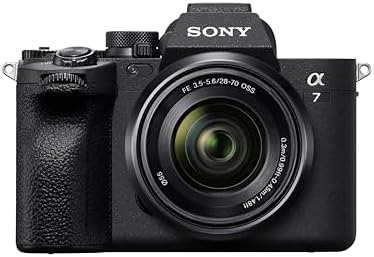
- BREATHTAKING IMAGE QUALITY: The 33 MP full frame Exmor R back-illuminated sensor paired with new Bionz XR processing pow…
- BEST AUTOFOCUS PERFORMANCE YET: Equipped with the latest Real-time Tracking and Eye AF technology (human/animal/bird) fo…
- UNIQUE SHOOTING EXPERIENCE: With a refined design, the Alpha 7 IV includes a fast and clear 3.69M dots electronic viewfi…
The era of “flipping your camera sideways” has evolved. In 2026, the best mirrorless cameras for vertical video are defined by their ability to recognise vertical orientation automatically, offer “open gate” recording for flexible cropping, and provide ergonomic support for portrait-mode shooting. Whether you are an influencer, a brand storyteller, or a cinematic filmmaker, these seven cameras represent the gold standard for vertical 4K content.
1. Sony ZV-E10 II: The Reigning King of Content Creation
The Sony ZV-E10 II has solidified its place as the go-to tool for modern vloggers. Building on its predecessor’s massive success, the Mark II version introduces 10-bit 4:2:2 internal recording and a revamped UI that rotates 90 degrees when you turn the camera.
-
Key Features: 26MP APS-C Sensor, 4K 60p oversampled from 5.6K, Cinematic Vlog settings, and a dedicated “Product Showcase” mode.
-
Performance Analysis: The autofocus remains the industry benchmark. In 2026, its AI-driven “Human Pose Estimation” ensures that even if your subject turns away, the focus remains locked.
2. Fujifilm X-S20: The “Open Gate” Specialist
Fujifilm’s X-S20 is a sleeper hit for vertical creators. Its ability to record in 6.2K Open Gate ($3:2$ aspect ratio) means you capture the entire sensor area, giving you massive amounts of “buffer” room to crop into a vertical $9:16$ frame without losing 4K resolution.
-
Key Features: 6.2K/30p internal recording, massive battery life (Vlog mode), and 7.0 stops of In-Body Image Stabilisation (IBIS).
-
Performance Analysis: The IBIS is particularly effective for vertical handheld “walk-and-talk” shots, which often suffer from more noticeable sway than horizontal footage.
3. Canon EOS R6 Mark III: The Professional Hybrid
For those who need a full-frame aesthetic for high-end vertical ads, the Canon EOS R6 Mark III is unrivalled. It balances speed and resolution with a sensor that excels in low-light environments like dimly lit restaurants or nighttime street vlogs.
-
Key Features: 32.5MP Full-Frame sensor, 4K 120p for vertical slow-motion, and Dual Pixel CMOS AF II.
-
Performance Analysis: The R6 Mark III features a new “Vertical UI” mode where all camera data moves to the top and bottom of the screen when rotated, preventing your thumbs from obscuring the view.
4. Panasonic Lumix GH7: The Stabilized Powerhouse
If you shoot high-energy vertical content (fitness, dance, or travel), the Lumix GH7 is your best friend. Its Micro Four Thirds sensor allows for the most robust IBIS in the industry, making gimbal-free vertical shooting a reality.
-
Key Features: Phase Detection AF, internal ProRes RAW, and unlimited 4K 60p recording.
-
Performance Analysis: It includes a unique “Real-Time LUT” feature, allowing you to bake your colour grade directly into the vertical file, saving hours in post-production.
5. Nikon Z8: The High-Resolution Titan
The Nikon Z8 is for the creator who refuses to compromise. While it’s a larger body, its ability to shoot 8K RAW means you can pull high-resolution vertical crops from a horizontal frame or shoot native 4K vertical with staggering detail.
-
Key Features: 4-axis tilting screen (perfect for low-angle vertical shots), 8.2K/60p N-RAW, and a modular design.
-
Performance Analysis: Its “Tally Lamp” is a small but vital feature for vertical creators, clearly indicating when the camera is rolling while you’re in front of the lens.
6. Sony A7S IV: The Low-Light Legend
Launched to redefine nighttime content, the Sony A7S IV is the specialised tool for creators who film in “moody” or dark environments. Its dual-base ISO makes 4K vertical video look noise-free even in moonlight.
-
Key Features: 12.1MP optimised sensor, 4K 120p uncropped, and AI-powered auto framing.
-
Performance Analysis: The Auto Framing feature is a game-changer; it can digitally “pan” within the 4K frame to keep you centred in a vertical crop even if the camera is stationary on a tripod.
7. Fujifilm X-M5: The Budget-Friendly Entry
For those just starting, the Fujifilm X-M5 offers the best price-to-performance ratio for vertical video. It’s ultra-compact, fitting into a jacket pocket, yet packs the same processor as Fujifilm’s flagship models.
-
Key Features: Film simulation dial for instant “looks”, 6K open gate, and a dedicated 9×16 Short Movie Mode.
-
Performance Analysis: It lacks IBIS, so it’s best used with a small tripod or a gimbal, but the colour science is unbeatable at this price point.
Pros and Cons Comparison
| Model | Best For | Pro | Con |
| Sony ZV-E10 II | Vlogging | Best-in-class AF | No Viewfinder |
| Fujifilm X-S20 | Versatility | 6.2K Open Gate | The menu can be complex |
| Canon R6 III | High-End Ads | Incredible low light | Pricey lenses |
| Lumix GH7 | Stabilization | No overheating | Smaller sensor |
Final Verdict
For the majority of creators in 2026, the Sony ZV-E10 II is the smartest investment for vertical 4K video due to its tailored “creator-first” features. However, if you want the flexibility to shoot once and crop for both YouTube and TikTok, the Fujifilm X-S20 with its “Open Gate” recording is the technical winner.
As an Amazon Associate, I earn from qualifying purchases.