Introduction to Video Doorbells
"Heads up: Some of the links in this post are affiliate links. This means if you click on the link and purchase the item, I’ll receive an affiliate commission. This helps keep the lights on here at techdhami.com! Thanks for your support!"
Video doorbells represent a significant advancement in home security technology, integrating traditional intercom functions with modern features that enhance user convenience and safety. Initially, door intercoms served the basic purpose of allowing homeowners to communicate with visitors at their doorstep. However, with the rapid evolution of technology, video doorbells have emerged as comprehensive smart devices, offering users a blend of security, functionality, and connectivity.
The primary purpose of a video doorbell is to provide homeowners with a visual and auditory connection to the person at their door. Equipped with cameras, microphones, and speakers, these devices allow users to see and interact with visitors in real-time, regardless of their physical location. This capability is particularly appealing in today's fast-paced world, where home security is a paramount concern for many. Enhanced features such as motion detection, night vision, and cloud storage for recorded video footage contribute to the increasing appeal of video doorbells.


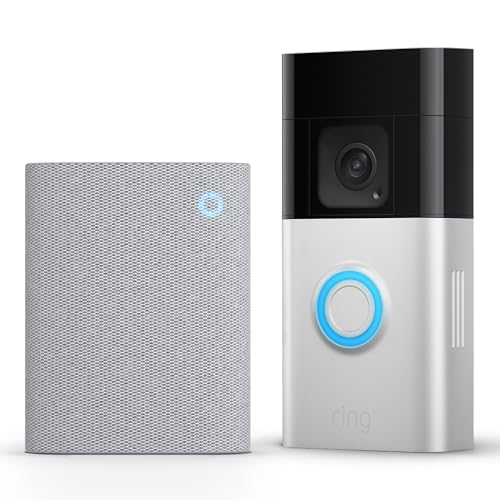
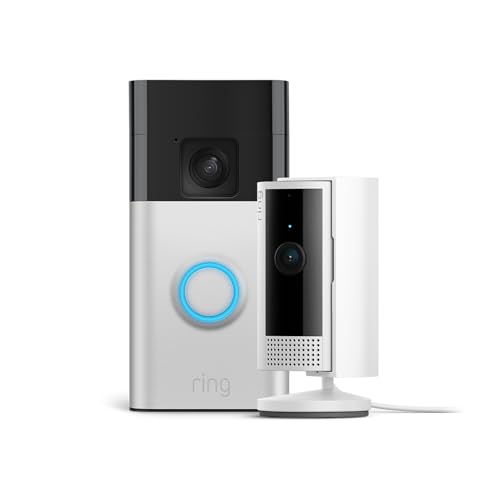
Over the last few years, there has been a notable surge in the popularity of video doorbells, driven by the growing demand for smart home devices that provide enhanced security and surveillance. Many models can be integrated with existing home automation systems, allowing for seamless integration with other smart devices. This evolution from a basic intercom system to a complex piece of technology reflects how homeowners are now prioritizing security measures in their habits and routines.
Overall, the rise of video doorbells signifies a broader trend towards smarter and more secure living environments. As technology continues to advance, these devices are increasingly becoming integral components of modern household security systems.
Understanding Resolution and Video Quality
When selecting a video doorbell, understanding the nuances of resolution and video quality is crucial for ensuring effective monitoring of your property. Video resolution primarily refers to the number of pixels that compose the video image. Common specifications include HD (720p), Full HD (1080p), and 4K. Each level of resolution significantly impacts the clarity and detail seen in the video feed.
HD resolution offers a decent quality for basic monitoring tasks, including identifying individuals at a distance. However, as the need for more detailed imagery arises, particularly in identification, it is recommended to upgrade to a Full HD (1080p) resolution. This standard offers a clearer and more detailed picture, allowing users to distinguish facial features, license plates, and other crucial details. The higher pixel density results in a sharper and more usable image, especially beneficial during daylight.
4K resolution is the apex of video quality available on the market today. Not only does it provide exceptional clarity, but it also enhances the viewing experience in varied lighting conditions, significantly improving night-time visibility by capturing more light and details. With advanced pixels, users can zoom in on feeds without losing essential details. However, it is important to note that while 4K offers superior quality, it often requires more storage and bandwidth, potentially necessitating an upgrade to your internet service or additional cloud storage solutions.
To maximize the utility of your video doorbell, consider your specific needs and the environment it will monitor. Whether you opt for HD, Full HD, or 4K, ensure that your chosen device meets your requirements for clarity, recognition, and overall performance in different lighting conditions.
Field of View: Why it Matters
The field of view (FOV) is a crucial feature to consider when selecting a video doorbell. The FOV refers to the extent of the observable area that the camera can cover, typically measured in degrees. A wider FOV allows homeowners to monitor larger areas, enhancing security by ensuring that the doorbell camera captures more of the surroundings. This is particularly significant for those who have larger porches, driveways, or gardens, where a narrow FOV may leave blind spots.
Most video doorbells on the market offer a FOV ranging from 90 to 180 degrees. A standard 90-degree field is generally adequate for small entries; however, as the area of coverage increases, opting for a wider FOV, such as 160 or 180 degrees, can provide essential additional surveillance. With a broader angle, homeowners are less likely to miss important activities in their vicinity, such as people approaching the door or accessing nearby property.
When choosing a video doorbell, homeowners should also consider how the layout of their property aligns with the camera's capabilities. For instance, if the home's entry point is situated at an angle or if there are obstacles like trees or walls, a wider FOV can help mitigate any potential obstructions. Additionally, some models feature adjustable lenses that can be modified to enhance coverage based on specific residential requirements.
Ultimately, assessing the FOV while keeping in mind the unique layout of your home enables homeowners to select the most fitting video doorbell. Ensuring adequate coverage can significantly enhance home security, allowing occupants to monitor their surroundings comprehensively and efficiently.
Two-Way Audio Capabilities
Two-way audio is an essential feature in modern video doorbells, significantly enhancing the communication capabilities between homeowners and visitors. This functionality allows individuals at the door to speak directly to those inside the home, creating a seamless interaction without needing to open the door. It is especially beneficial for delivering important messages or instructions securely from a distance.
The technology behind two-way audio typically involves a built-in microphone and speaker within the doorbell unit. This technology facilitates real-time communication, meaning that both parties can hear and respond to each other simultaneously. Most advanced video doorbell models incorporate noise cancellation and high-definition audio, ensuring clear conversations, even in noisy outdoor environments. Moreover, the convenience of two-way audio means homeowners can communicate with delivery personnel, notify guests of their arrival, or even deter potential intruders without ever needing to be physically present at the door.
There are numerous practical scenarios in which two-way audio proves invaluable. For instance, pet owners often utilize this feature to soothe their animals during an unexpected visitor's arrival, providing reassurance through their voice. Additionally, for elderly or disabled individuals who may have difficulty answering the door, this technology offers significant convenience, allowing them to communicate easily with others. Furthermore, this feature plays an essential role in security; homeowners can assess and respond to suspicious activities from the safety of their homes, enhancing their peace of mind. As such, an effective video doorbell with robust two-way audio capabilities can not only improve daily life but also contribute to an enhanced sense of security.
Night Vision: What to Look For
Night vision capabilities are a crucial feature to consider when selecting a video doorbell, as these devices function as your first line of security, even in low-light conditions. High-quality night vision technology ensures that you can consistently monitor your doorstep, effectively deterring potential intruders and maintaining your peace of mind after dark.
When examining night vision features in video doorbells, two primary technologies are often highlighted: infrared night vision and color night vision. Infrared night vision employs infrared LEDs to illuminate the area, allowing the camera to capture clear images in complete darkness. This technology typically displays images in black and white, yielding a sharp contrast that enhances visibility and detail. In contrast, color night vision is more advanced and uses a combination of enhanced sensors and low-light capabilities to record in color, even with minimal ambient light. This can provide better context for nighttime movements, such as identifying the color of clothing or vehicles.
However, each night vision option has its advantages and limitations. While infrared night vision may be highly effective in total darkness, it may struggle with clarity and detail in dimly lit environments. Conversely, color night vision can articulate more substantial details and colors but may require some light for optimal functioning. Therefore, it's essential to assess your specific lighting conditions when choosing a video doorbell model.
In addition to the type of night vision, consider the quality of the camera’s resolution and the field of view. A higher resolution camera will provide clearer images, which becomes frankly crucial at nighttime. By understanding the various night vision technologies and their implications for usability, you can make an informed choice for your home security needs.


Integration with Smart Home Systems
When selecting a video doorbell, one of the pivotal aspects to consider is its ability to integrate seamlessly with existing smart home systems. Modern households increasingly rely on interconnected devices to enhance security, convenience, and connectivity. Therefore, choosing a video doorbell that is compatible with platforms such as Amazon Alexa, Google Assistant, and smart locks can significantly elevate your home automation experience.
Video doorbells that integrate with smart home systems provide users with the ability to monitor visitors directly from their smartphones, tablets, or even through connected smart displays. For instance, a video doorbell compatible with Amazon Alexa allows homeowners to utilize voice commands to view the front door's live feed, receive alerts, and communicate with people at their door, all hands-free. This level of accessibility not only enhances convenience but also reinforces security measures.
Furthermore, the interoperability among different smart home devices enables users to create customized security routines. Imagine the peace of mind when your video doorbell detects motion and triggers your smart locks to automatically lock the door or sends alerts across your devices. This level of integration provides a comprehensive security ecosystem that is easy to manage and operate. Moreover, some video doorbells can be integrated with smart lighting systems, illuminating the front area when motion is detected, which can deter potential intruders.
In addition to functional benefits, the aesthetic and organizational aspects of managing interconnected systems also play a critical role. A unified smart home system allows for streamlined control and monitoring, helping users to maintain a cohesive and efficient home environment. Overall, the compatibility of video doorbells with smart home systems not only enhances the security of your home but also simplifies everyday tasks, providing valuable peace of mind to homeowners.
Storage Options: Cloud vs. Local Storage
When considering a video doorbell, understanding the different storage options for recorded footage is crucial. Video doorbells typically offer two primary storage methods: cloud storage and local storage, each presenting its own advantages and drawbacks.
Cloud storage has gained popularity due to its convenience and accessibility. With cloud storage, recorded footage is stored on remote servers, allowing users to retrieve video clips from anywhere via a mobile app or a web browser. This accessibility can be particularly beneficial if you need to review footage while away from home. Moreover, cloud storage often comes with a subscription plan, which may include additional features such as enhanced motion detection, longer retention periods for recordings, and the ability to share access with family members. However, the downside to cloud storage lies in the ongoing costs associated with subscription plans, which can accumulate over time. Furthermore, reliance on internet connectivity means that if your internet goes down, so does your access to recorded footage.
On the other hand, local storage involves saving recorded footage directly onto a device, typically an SD card or a network-attached storage (NAS) system. This option eliminates the need for ongoing subscription fees, potentially making it a more cost-effective solution in the long run. Local storage allows for physical ownership of the video footage, providing peace of mind regarding privacy and data security. Users can access recordings without needing an internet connection; however, the challenge lies in the limited storage capacity of SD cards and the potential for loss due to theft or damage to the device.
In evaluating whether cloud or local storage is best for your video doorbell system, consider factors such as budget, accessibility, and privacy preferences. Both options have distinct benefits that cater to different user requirements, ultimately determining the right choice for your home security.
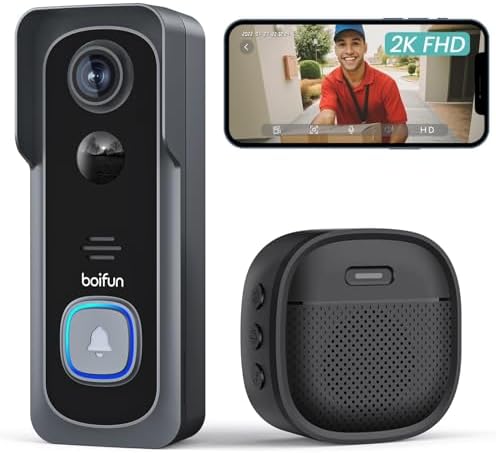
- 【𝟐𝐊 𝐍𝐢𝐠𝐡𝐭 𝐕𝐢𝐬𝐢𝐨𝐧 & 𝐍𝐨 𝐌𝐨𝐧𝐭𝐡𝐥𝐲 𝐅𝐞𝐞】This Boifun doorbell camera wireless delivers sharp, detailed footage day and night wi...
- 【𝐇𝐮𝐦𝐚𝐧 𝐃𝐞𝐭𝐞𝐜𝐭𝐢𝐨𝐧 & 𝐈𝐧𝐬𝐭𝐚𝐧𝐭 𝐎𝐧𝐞-𝐓𝐚𝐩 𝐀𝐥𝐞𝐫𝐭】Powered by the intelligent algorithm for enhanced accuracy and safety! Once sus...
- 【𝐒𝐞𝐞 𝐌𝐨𝐫𝐞 𝐰𝐢𝐭𝐡 𝟏𝟔𝟔° 𝐖𝐢𝐝𝐞 𝐕𝐢𝐞𝐰 & 𝐑𝐢𝐜𝐡 𝐃𝐞𝐭𝐚𝐢𝐥𝐬】This smart safe video doorbell wireless features a 166° wide-angle lens to ...
Battery Life and Power Options
When selecting a video doorbell, it is crucial to consider the power options available, as they fundamentally affect convenience, maintenance, and overall reliability. There are primarily two types of power sources: battery-operated and wired. Each option has its distinct advantages and drawbacks that can impact your purchasing decision.
Battery-operated video doorbells are particularly appealing due to their installation flexibility. These models can be mounted anywhere, unbound by wired connections. However, they do require regular maintenance, as the batteries need to be recharged or replaced periodically. The battery life can vary significantly depending on usage frequency and the specific model, hence it is essential to check the manufacturer's specifications. Some brands boast extended battery life, which can alleviate the inconvenience of frequent charging.
On the other hand, wired video doorbells typically provide a more consistent power source, resulting in unmatched reliability. Without the need for battery replacement, these models ensure uninterrupted operation. Installation, however, can be slightly more complicated, as it requires electrical wiring and sometimes an existing doorbell system. This might necessitate the help of a professional, especially if you're inexperienced with electrical installations.
Regardless of the power option chosen, ensuring an adequate power supply is vital. For battery-operated models, choose placements that minimize exposure to harsh weather conditions to preserve battery health. For wired options, confirm that the voltage requirements align with your home’s electrical system to avoid operational issues. Exploring both battery life and power options will help you select a video doorbell that fits seamlessly into your home while meeting your security needs effectively.
Price vs. Features: Finding Your Budget Sweet Spot
When considering the purchase of a video doorbell, understanding the relationship between price and features is essential for making a decision that aligns with both your budget and needs. Video doorbells are available at various price points, and each price tier often corresponds to specific features, functionalities, and levels of quality.
Starting with entry-level models, these devices usually offer basic features such as standard video quality, two-way audio communication, and motion detection alerts. While these options are affordable, they might lack advanced functionalities such as high-definition video, cloud storage, or smart home integration capabilities. If your primary goal is to enhance home security without investing significantly, basic models could serve you well.
On the other hand, mid-range to high-end video doorbells typically come with enhanced features such as HD and even 4K video resolution, wider field of view, night vision, and advanced motion detection technology. These models are often equipped with smart home compatibility, allowing users to integrate the doorbell with existing home security systems. Additionally, they may offer subscription-based services for cloud storage and extended features, which could be worth the investment depending on your needs.
When evaluating your budget, it is vital to consider the long-term value of your investment. Higher-priced models may come with warranties and premium customer support, which can save money in the long run. Investing in a quality doorbell can enhance your security and provide peace of mind, ultimately offering better value over time. Thus, identifying the right balance between budget constraints and desired features will ensure you select a video doorbell that meets your requirements without overspending.


0 Comments