Introduction to the Canon EOS R5 Mark II
The Canon EOS R5 Mark II, launched as a successor to the acclaimed EOS R5, stands as a testament to Canon's commitment to innovation in the competitive landscape of hybrid cameras. Released in the latter part of 2023, this camera integrates advanced features that cater to both photographers and videographers, thus maintaining its reputation as a hybrid powerhouse.
"Heads up: Some of the links in this post are affiliate links. This means if you click on the link and purchase the item, I’ll receive an affiliate commission. This helps keep the lights on here at techdhami.com! Thanks for your support!"
One of the key features of the EOS R5 Mark II is its impressive 45-megapixel full-frame sensor, which offers high-resolution stills that satisfy the demands of professional photographers. The camera’s rapid continuous shooting speed of up to 20fps, enabled by its advanced autofocus system, allows users to capture moments with unprecedented accuracy. Additionally, the incorporation of Canon's Dual Pixel CMOS AF technology enhances the camera's performance in various lighting conditions, making it an ideal option for dynamic shooting environments.
For videographers, the EOS R5 Mark II supports 8K video recording at 30 frames per second, along with 4K at 120 frames per second, positioning it as a versatile tool for filmmakers. The robust cooling system is a significant enhancement over its predecessor, addressing prior concerns regarding overheating during extended recording sessions. Furthermore, the added benefits of Canon Log 3 and HDR PQ provide expansive creative options in post-production.
The Canon EOS R5 Mark II has been well-received in the photography and videography community, hailed for its raw power and advanced imaging capabilities. This model fits seamlessly within Canon's growing lineup of mirrorless cameras, offering a perfect blend of quality and functionality, much like its predecessor. Enthusiasts and professionals alike eagerly await to explore the boundaries of their creativity with this innovative tool, ensuring that the legacy of the R-series continues to thrive in the fast-evolving market of hybrid cameras.
Design and Build Quality
The Canon EOS R5 Mark II is not only a technological marvel but also a fine example of superior design and build quality in the realm of high-end mirrorless cameras. One of the most notable aspects of its design is the ergonomic layout, making it particularly user-friendly for professionals. The grip is designed to fit comfortably in hand, facilitating prolonged use without causing discomfort. This is crucial for photographers who may spend hours capturing images or recording video.
Constructed with a durable magnesium alloy body, the R5 Mark II features weather-sealing that enhances its resilience against dust and moisture. This particular build quality makes it an excellent choice for shooting in challenging environments, such as outdoor settings or during inclement weather. Compared to its competitors, such as the Sony A7R V or the Nikon Z9, the R5 Mark II stands out with its robust build, which is essential for professionals who require a reliable camera that can endure rigorous conditions.
Additionally, the R5 Mark II incorporates thoughtfully designed controls and button placements that cater to the shooting needs of professionals. The customizable buttons allow users to adapt the camera settings to their personal preferences, streamlining the shooting process. This level of customization is a key feature that enhances usability, particularly when quick adjustments are needed in dynamic shooting scenarios.
In terms of aesthetics, the R5 Mark II strikes a balance between modern design and professional functionality. The streamlined appearance is complemented with a clear, high-resolution electronic viewfinder and an intuitive touchscreen interface, both essential for precise control and accurate framing. Overall, the design and build quality of the Canon EOS R5 Mark II make it a commendable choice for professionals seeking a reliable and effective hybrid camera.

- Completely NEW Canon designed full-frame back-illuminated stacked CMOS 45MP sensor.
- Fast sensor read-out speeds allow for up to 30 fps electronic shutter performance.
- New focus system upgrades include eye control focus, and the ability to maintain focus on a subject even when obscured b...
Image Quality and Performance
The Canon EOS R5 Mark II has garnered significant attention for its superior image quality and exceptional performance metrics that cater to the needs of both professional photographers and videographers. At the core of this mirrorless camera is a robust sensor boasting an impressive resolution of 45 million pixels, which allows for capturing intricate details across wide compositions. This high pixel density not only aids in delivering sharp images but also expands the possibilities for cropping without compromising quality.
Dynamic range plays a critical role in determining how well a camera performs in varying lighting conditions. The R5 Mark II excels in this aspect, offering a dynamic range that allows for impressive detail retention, particularly in shadow and highlight areas. Photographers will appreciate the ability to recover details in post-processing, which significantly broadens creative freedom, especially in high-contrast environments.
Moreover, color accuracy remains a standout feature of the R5 Mark II, with advanced color science that renders hues with remarkable fidelity. This level of accuracy is crucial for professionals in fields such as portrait and product photography, where true-to-life representation is paramount. The camera’s impressive ISO range further enhances its usability in low-light situations, effectively minimizing noise while sustaining clarity—a common concern evaluators often raise when analyzing mirrorless systems.
In comparison to its predecessor, the R5 Mark II introduces advancements such as improved autofocus capabilities and enhanced video features, including 8K recording options that set new industry standards. These technological improvements solidify the R5 Mark II’s status in the competitive hybrid camera market, affirming its role as an essential tool for professionals aiming to achieve uncompromised image quality alongside seamless operational efficiency.
Video Capabilities
The Canon EOS R5 Mark II continues the legacy established by its predecessor with an impressive array of video recording options, designed specifically for modern content creators. With the ability to shoot 8K video at 30 frames per second (fps), it provides filmmakers with breathtaking resolution and detail. Moreover, the camera supports 4K recording at up to 120 fps, making it suitable for high-speed and slow-motion projects.
One of the key enhancements in the R5 Mark II is the expanded codec support. Users can now benefit from the addition of the **Canon Log 3** and **HDR PQ** modes, which provide greater flexibility during post-production, enhancing dynamic range and color grading capabilities. Furthermore, the inclusion of RAW recording options—such as Cinema RAW Light—allows for maximum detail retention, making it easier to achieve professional-quality results.
Additionally, the EOS R5 Mark II introduces improved overheating management, a significant concern during extended shooting sessions that previously affected the original model. This advancement ensures that content creators can record longer takes without worrying about potential interruptions due to overheating. The camera also features **electronic image stabilization (EIS)**, which provides smoother footage, particularly useful in handheld shooting scenarios.
The camera features dual card slots, accommodating both CFexpress and SD UHS-II cards, ensuring ample space for high-bitrate video recording. With these enhancements, the Canon EOS R5 Mark II not only retains its stature as a hybrid powerhouse but also solidifies its position as an essential tool for professionals dedicated to high-quality video content production.
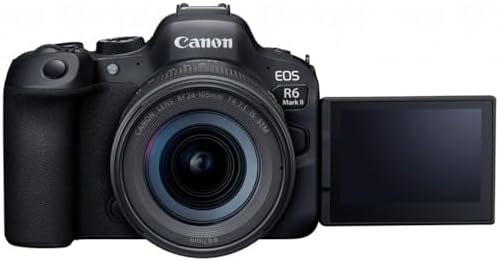
- Mirrorless camera with 24.2 MP Full Frame CMOS sensor & DIGIC X processor
- ISO102,400 (ext. ISO 204,800) with AF down to -6.5 EV
- Continuous shooting up to 40fps elec. or 12fps mech
Autofocus System
The Canon EOS R5 Mark II boasts a highly advanced autofocus system that is central to its reputation as a hybrid powerhouse in the competitive world of mirrorless cameras. With its Dual Pixel CMOS AF II technology, the R5 Mark II features an impressive 1,053 AF points, which cover nearly the entire frame, ensuring that focus acquisition is swift and accurate regardless of the subject’s position in the frame. This feature is particularly beneficial for professional photographers and videographers who rely on precision and speed while capturing dynamic subjects.
One of the standout capabilities of the autofocus system in the Canon EOS R5 Mark II is its eye and face tracking functionality. This system excels in recognizing and locking onto human eyes, effectively keeping subjects in sharp focus, even as they move. The implementation of this technology permits remarkable reliability during portrait photography and fast-paced events, setting a benchmark for competitors in the hybrid camera market. Compared to rivals such as the Sony A7 IV and Nikon Z9, the R5 Mark II’s tracking performance remains competitive, with many users praising its ability to maintain focus under varying lighting conditions.
Moreover, the autofocus speed of the Canon EOS R5 Mark II is impressive, with instantaneous focusing capabilities that enhance shooting efficiency. The burst shooting mode, coupled with the camera's processing engine, allows for continuous shooting at high frames per second while maintaining rapid autofocus response. This combination is advantageous in sports and wildlife photography, where fleeting moments must be captured with precision. Overall, the autofocus system of the R5 Mark II establishes itself not only as a feature of convenience but also as a critical component that gives this hybrid camera an edge in performance within its class.
Battery Life and Connectivity
The Canon EOS R5 Mark II is renowned for its impressive battery life, which is particularly vital for professionals who depend on their equipment to perform flawlessly during extended shooting sessions. Under typical usage, such as shooting still images, the battery can last significantly longer compared to continuous video recording. When capturing still photos, users may expect around 320 shots per charge based on CIPA standards. In contrast, video recording tends to drain the battery more rapidly. For 4K video, the battery can last approximately 2 hours depending on settings, frame rates, and environmental conditions. Therefore, professionals may consider investing in additional batteries or a power bank to ensure uninhibited workflow on location.
Moreover, the EOS R5 Mark II features a contextually beneficial dual card slot that supports CFexpress and SD UHS-II formats. This design allows for simultaneous recording to both cards, providing valuable redundancy—especially during critical shoots. The efficiency of file writing and management, coupled with battery endurance, makes it conducive for professionals to capture extensive sequences without interruption.
On the connectivity front, the Canon EOS R5 Mark II is equipped with advanced options that foster seamless integration into professional workflows. It includes built-in Wi-Fi and Bluetooth capabilities, allowing for easy sharing of images and remote control through a smartphone or tablet. This connectivity can streamline processes, especially when rapid upload and dissemination of content are crucial. Additionally, it is compatible with Canon’s Image.canon cloud service, enhancing collaboration and accessibility. Such features contribute greatly to the professional's workflow, ensuring that the EOS R5 Mark II meets the demands of both still and video production with efficacy.
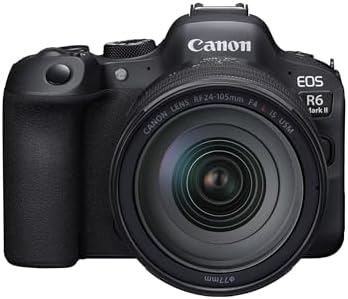
- Mirrorless camera with 24.2 MP Full Frame CMOS sensor & DIGIC X processor ISO102,400 (ext. ISO 204,800) with AF down to ...
- Cont. shooting up to 40fps elec. or 12fps mech. Shoot handheld up to 8-stops of IS
- AF system detects eye, face, head, body, animal & vehicle Capture 4K video at 60p,6K ProRes RAW to external Atomos Ninja...
Canon's Ecosystem and Lens Compatibility
The Canon EOS R5 Mark II represents a significant advancement in the realm of hybrid cameras, particularly in terms of its compatibility with an expansive ecosystem of lenses. This camera is part of Canon's RF mount system, which has steadily grown since its introduction. As of now, users can take advantage of a diverse range of existing RF lenses tailored to maximize the performance of the EOS R5 Mark II. These lenses are designed specifically for the camera's full-frame sensor, offering superior optical quality and enhanced autofocus capabilities.
In addition to RF lenses, the EOS R5 Mark II also accommodates older EF lenses through the use of Canon's dedicated mount adapter. This adaptability means that photographers who have invested in Canon's EF lens collection can seamlessly transition to the RF platform without sacrificing their current gear. The lens adapter ensures that the EF lenses maintain their functionalities, including autofocus, image stabilization, and compatibility with the camera's advanced features.
The current lens ecosystem is not static; Canon regularly expands its offerings and has hinted at future lens releases specifically designed for the RF mount. This ongoing development is crucial for users who require specialized lenses for their photographic needs. The anticipation of new lens launches further enhances the appeal of the Canon EOS R5 Mark II among professionals, as it opens up possibilities for creative exploration and expansion of the camera’s capabilities.
Overall, the compatibility with both RF lenses and EF lenses through adapters grants the Canon EOS R5 Mark II a significant advantage in the competitive landscape of hybrid cameras. This versatility, combined with the potential for future lens developments, positions the R5 Mark II as an appealing choice for professionals seeking a robust and flexible photographic tool.
User Feedback and Real-World Usage
The Canon EOS R5 Mark II has garnered considerable attention from both amateur and professional photographers alike. Users have reported a range of experiences across different shooting environments, showcasing the camera's versatility and performance in real-world applications.
Many professional photographers have praised the enhanced autofocus capabilities of the R5 Mark II, which utilizes a sophisticated Dual Pixel CMOS AF system. One wedding photographer noted that the camera's ability to track fast-moving subjects, such as dancing couples, was exceptional, resulting in a collection of sharp, perfectly timed images. The camera’s eye-tracking functionality, lauded by portrait photographers, allows for engaging captures with seamless focus on subjects, even amid dynamic backgrounds.
In terms of video production, videographers have highlighted the R5 Mark II’s capability to record in 8K resolution at 30 frames per second. A documentary filmmaker described the cinematic quality and depth of color captured in various lighting conditions, which has significantly elevated the production value of their projects. Additionally, the camera's built-in stabilization features have enabled smooth handheld shots, minimizing the need for additional gimbals or stabilizers.
However, user feedback is not without critique. Some photographers expressed concerns about the camera's overheating issues during prolonged video recording. In high-temperature environments, such as during outdoor events, the R5 Mark II may exhibit thermal warnings, which poses a challenge for longer shoots. Furthermore, while many users lauded the camera’s image quality, some noted that the large file sizes associated with 8K video can become cumbersome for storage and editing.
Overall, the Canon EOS R5 Mark II continues to impress with its robust features and capabilities. While some users have faced challenges, particularly with overheating and file management, the majority of feedback points toward a satisfying photographic and videographic experience, reaffirming its status as a hybrid camera of choice for professionals.

- 45MP Full-Frame Stacked BSI CMOS Sensor
- DIGIC Accelerator Processing
- Dual Pixel Intelligent AF, Eye Control
Conclusion: The Future of the Hybrid Market
The Canon EOS R5 Mark II has proven to be a formidable contender in the realm of hybrid cameras, largely fulfilling its promise to deliver excellent still photography capabilities combined with high-quality video recording features. With its robust specifications—such as impressive resolution, advanced autofocus systems, and enhanced video functionalities—it stands as a leader in a rapidly evolving market. However, as with any product, it is essential to acknowledge both its strengths and weaknesses.
This latest model embodies Canon's commitment to innovation in hybrid technology, catering to both professional photographers and videographers. Its ability to seamlessly switch between stills and video formats has positioned it as a resourceful tool for those who rely heavily on versatility. Nevertheless, certain criticisms regarding battery life and overheating during extended video shoots could influence user experience, potentially leading to hesitance among aspiring professionals.
As we look toward the future of the hybrid camera market, it is evident that innovation will remain key. Competition is intensifying, with brands releasing their own versions of hybrid models, each trying to capture the attention of creators seeking the perfect balance between image quality and adaptability. While the Canon EOS R5 Mark II maintains a notable presence in this landscape, aspiring professionals must weigh their options carefully and consider how well their shooting needs align with the camera's capabilities.
Ultimately, whether the Canon EOS R5 Mark II retains the title of




0 Comments