Understanding High-Impedance Headphones
High-impedance headphones are designed with a resistance typically ranging between 100 to 600 ohms, differentiating them from low-impedance headphones, which usually have an impedance of 16 to 80 ohms. The construction of high-impedance headphones generally involves thicker wire coils and higher-quality materials, allowing them to achieve superior sound quality and detail. These headphones are favored in professional settings, such as recording studios, where audio fidelity is paramount.
One significant advantage of high-impedance headphones is their ability to deliver clearer and more nuanced audio reproduction. This characteristic makes them particularly suitable for critical listening environments, enabling sound engineers and musicians to accurately monitor mixes and recordings. Furthermore, high-impedance headphones tend to be less sensitive to distortion when powered by high-quality digital-to-analog converters (DACs) and amplifiers, providing a dynamic sound range that appeals to audiophiles.

- ✨【HIGH FIDELITY AUDIO】Uliptz bluetooth earphones deliver crystal crisp high, balanced mids and powerful bass through 40m...
- ✨【BLUETOOTH 5.3 CONNECTION】The wireless Bluetooth headphones are compatible with all Bluetooth-enabled devices. Advanced...
- ✨【UP TO 65 HOURS PLAYTIME】Uliptz wireless headphones deliver up to 65 hours playtime on a single charge. A quick 10-minu...
However, high-impedance headphones can present some challenges. They typically require more power to reach optimal volume levels, which means that they may not perform well when connected to portable devices like smartphones or laptops without adequate amplification. This limitation can restrict their usability, particularly for casual listeners who prefer convenience over audio precision. Conversely, low-impedance headphones can be driven by a wider range of devices, making them more versatile and user-friendly.
Common use cases for high-impedance headphones include studio work, critical listening, and high-end audio systems. They are often the preferred choice for audiophiles and professionals who prioritize sound quality and detailed audio representation. As such, understanding the distinctions between high-impedance and low-impedance headphones is fundamental for selecting the appropriate equipment, especially when it comes to pairing with compatible DACs and amplifiers.
The Role of DACs and Amps in Audio Systems
In an audio system, the interaction between Digital-to-Analog Converters (DACs) and amplifiers (amps) is pivotal in achieving high-quality sound output, particularly when it comes to high-impedance headphones. A DAC's primary function is to transform digital audio signals from sources such as computers, smartphones, or streaming devices into analog signals that can be processed by headphones or speakers. This conversion is critical because most music is stored in digital formats, while our ears perceive sound in analog waves.
The quality of the DAC significantly impacts the audio experience. Higher-quality DACs can render more detail and nuance in sound reproduction, minimizing distortion and noise. This enhancement is particularly important for high-impedance headphones, which often require better signal fidelity to function optimally. Many users underestimate the necessity of a quality DAC, thinking their devices' built-in converters will suffice. However, investing in an external DAC can dramatically improve sound clarity and depth.
On the other hand, amplifiers play a crucial role in driving the audio signal to the headphones. They increase the power of the audio signal, ensuring that it can effectively engage high-impedance headphones that typically require greater power levels to reach peak performance. The relationship between the amp's output power, the required driving power of the headphones, and the load impedance is critical to achieving optimal listening levels without distortion. Insufficient amplification can lead to a flat, uninspiring audio output.
Choosing the right combination of DAC and amp is essential for anyone seeking the best audio experiences with high-impedance headphones. These components must work in tandem, ensuring that digital signals are accurately converted and sufficiently powered for high-fidelity sound reproduction.

- All-Day Comfort & Premium Design: Crafted with high-quality materials, these over-ear wireless headphones combine luxury...
- Unbeatable 60-Hour Battery Life: Enjoy up to 60 hours of playtime in standard mode at moderate volume. A quick 5-minute ...
- Bluetooth 6.0 & Seamless Connectivity: Advanced Bluetooth 6.0 ensures stable, high-speed pairing with smartphones, table...
Key Factors to Consider When Choosing a DAC
When selecting a Digital-to-Analog Converter (DAC) for high-impedance headphones, several key specifications and features must be taken into account to ensure optimal audio performance. One of the primary specifications is the bit depth, which determines the accuracy of the audio signal. A higher bit depth results in a larger dynamic range, allowing for a more faithful reproduction of sound. Generally, 16-bit DACs are sufficient for standard listening, while 24-bit or higher is preferred for audiophiles seeking enhanced sound quality.
The sampling rate, which represents how many times the audio is sampled per second, also plays a crucial role. Common sampling rates include 44.1 kHz, 48 kHz, and high-resolution options like 96 kHz or 192 kHz. For high-impedance headphones, selecting a DAC with a high sampling rate will allow for more detailed and expansive sound stages. This aspect is particularly important as high-impedance headphones are often designed for critical listening.
Another important factor is the chipset quality. High-quality chipsets, such as those from known manufacturers like ESS, AKM, or Cirrus Logic, contribute significantly to the overall sound signature. Look for DACs that have positive reviews regarding their chipset performance and reliability.
Compatibility with various audio formats is essential, especially if you plan to use high-resolution files. Ensure the DAC supports popular formats like DSD, PCM, and MQA to future-proof your setup.
Additional considerations include the noise floor and dynamic range of the DAC, as these will affect the clarity and detail of the audio. Lower noise floors result in a cleaner signal, beneficial for the intricate sound reproduction required by high-impedance headphones.
Connectivity options, such as USB, optical, or coaxial inputs, are also crucial. Opting for a DAC that offers versatile connectivity will enhance compatibility with multiple devices, enriching your overall listening experience.
Essential Amp Specifications for High-Impedance Headphones
When selecting an amplifier for high-impedance headphones, certain specifications are crucial to ensure optimal performance. One of the most critical factors is the output power. High-impedance headphones often require more power to achieve adequate volume levels. An amplifier should ideally provide sufficient wattage into the headphone's impedance rating—generally, an output power of at least 200-400mW at 600 ohms is recommended for optimal performance. Insufficient power can lead to distortion and a lack of clarity.
Another important specification is the damping factor, which refers to the amplifier's ability to control the movement of the headphone drivers. A higher damping factor results in better transient response and more accurate sound reproduction. This is particularly significant for high-impedance headphones that might otherwise exhibit a_looser_ sound. Aiming for a damping factor of 10 or above is advisable for most high-end listening experiences.
Total harmonic distortion (THD) is yet another specification to consider, as it indicates the clarity of the sound the amplifier will produce. Lower THD values, typically below 0.01%, signify cleaner audio reproduction, which is crucial for revealing the intricacies of high-impedance headphones. Additionally, choosing an amplifier with low output impedance is vital; ideally, the output impedance should be less than 1/8th of the headphone's impedance. This allows for a better match and ensures the headphones perform at their best, resulting in a balanced frequency response and reduced coloration of the sound.
Investing time in understanding these essential amplifier specifications can significantly enhance the listening experience with high-impedance headphones. By ensuring adequate output power, a favorable damping factor, low THD rates, and matching output impedance, users can fully appreciate the fine details and vast soundstage that high-impedance models offer.

- SMART ANC HEADPHONES: Smart Active Noise Cancellation adjusts to the environment and continually learns how to best canc...
- IMMERSIVE LAB QUALITY SOUND: Active noise-cancelling headphones with exceptional sound quality via 40mm drivers, bringin...
- LONG BATTERY LIFE & COMFORT: Over-ear headphones that let you enjoy up to 70+ Hours of Bluetooth 5.3 playtime. Turn ANC ...
Matching Amp and DAC: Synergy and Compatibility
When selecting a Digital-to-Analog Converter (DAC) and an amplifier (amp) for high-impedance headphones, achieving synergy between these components is of vital importance. The compatibility of the DAC and amp primarily revolves around their output voltage and current requirements. High-impedance headphones generally demand higher voltage levels to reach their optimal sound performance. Subsequently, it is essential to choose an amplifier that can deliver sufficient voltage to fully drive these headphones, thereby allowing them to achieve their full potential.
A key consideration in the compatibility of a DAC and amp is their output specifications. The output voltage of the DAC must align with the input requirements of the amp. If a DAC provides insufficient voltage, the amp might not perform optimally, leading to a bottleneck in audio quality. Conversely, an overpowered amp may not pair well with a lower-capacity DAC, potentially leading to distortion or unwanted artifacts in sound reproduction. Therefore, understanding the specs of both the DAC and the amp is crucial for achieving the best sound.
Additionally, one must also consider the current requirements of the headphones themselves. High-impedance headphones often require a higher current to drive than their lower-impedance counterparts. Thus, the chosen amplifier should not only provide the necessary voltage but also the adequate current output to sustain sound quality without introducing distortion. By ensuring that both the DAC and amp are well matched in both voltage and current specifications, listeners can avoid bottlenecks in audio performance.
In conclusion, synergy between a DAC and an amplifier is essential for optimal performance when driving high-impedance headphones. By taking into account the requirements of both components, one can create a setup that amplifies the listening experience, delivering superior audio fidelity and clarity.
Budget Considerations: Finding Balance in Investment
When investing in a DAC (digital-to-analog converter) and amp setup for high-impedance headphones, budget considerations play a crucial role. Understanding how to effectively allocate funds while ensuring optimal audio performance is essential for any audiophile. High-impedance headphones typically require more power than their low-impedance counterparts, demanding appropriate amplification and conversion quality, which can affect pricing.
Price ranges for quality DACs and amps can vary significantly, starting from as low as $100 for entry-level options and scaling up to several thousand dollars for high-end models. A fundamental principle to consider is that more expensive components often provide better build quality and audio fidelity. However, the necessity of maximizing your investment without succumbing to brand prestige is paramount. In this context, striking a balance is key.
It is advisable to research and compare various options within a defined budget. For instance, DACs and amplifiers in the mid-range pricing tier often deliver an excellent compromise between quality and expense, often yielding noticeable sound enhancements without delving into exorbitant financial commitments. Additionally, the evaluation of reviews, user feedback, and expert opinions is vital in identifying equipment that provides the best value.
Moreover, consider investigating options for used or refurbished devices; these can offer significant savings while still maintaining high performance. Investigating lesser-known brands that specialize in audio gear can also lead to discovering gems that provide superior sound at lower prices. Ultimately, the goal should be to assemble a setup that not only fits within your budget but also delivers the required power and fidelity that high-impedance headphones demand.
When selecting a Digital-to-Analog Converter (DAC) and amplifier (amp) for high-impedance headphones, it is essential to consider various factors, including specifications, functionality, and intended use. Below are some top recommendations across different price points.
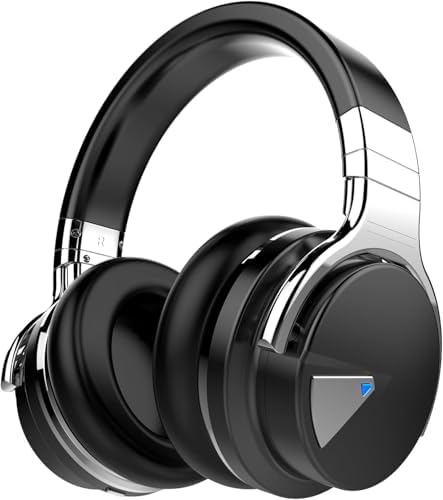
- Active Noise Cancellation ANC: Advanced ANC technology significantly reduce unwanted noise such as cabin noise, traffic ...
- Premium Sound Quality: The Custom 45mm Large Aperture Drivers deliver crystal clear audio with more details, deep and pr...
- Premium Built-in Microphones and Advanced Bluetooth 5.0: E7 Active Noise Cancelling headphones provide crystal clear and...
1. AudioQuest DragonFly Red
The AudioQuest DragonFly Red is a compact USB DAC and amp designed for audiophiles seeking high-resolution audio. It supports resolutions up to 24-bit/96kHz and features a powerful, built-in headphone amplifier, making it ideal for high-impedance headphones. This device is particularly well-suited for desktop use or as a portable solution for on-the-go listening. At approximately $199, it is an accessible option for those who want excellent sound quality without breaking the bank.
2. Schiit Magni 3+/ Modi 3+
For a more robust setup, the combination of Schiit Magni 3+ (amp) and Modi 3+ (DAC) provides an exceptional value. The Magni 3+ is powerful enough to drive high-impedance headphones with ease and offers a range of features, including low gain settings for sensitive headphones. The Modi 3+ DAC supports resolutions up to 24-bit/192kHz and ensures minimal signal degradation. This stellar pairing is perfect for home listening and retails for around $200 for the duo, appealing primarily to audiophiles and dedicated listeners.
3. iFi Hip-DAC
The iFi Hip-DAC is a portable option that features a battery-powered design, making it perfect for users who often listen to music away from home. This DAC and amp support multiple formats including MQA and DSD up to 128, all while easily powering high-impedance headphones. It is priced around $149, representing great value for those who need convenience without sacrificing quality.
In choosing a DAC and amp for high-impedance headphones, these recommendations cater to diverse preferences, ensuring all users can find a suitable pairing that meets both performance and budget requirements.
Additional Accessories for Optimizing Performance
When considering high-impedance headphones, the right digital-to-analog converter (DAC) and amplifier are critical, but additional accessories can significantly enhance your listening experience. First and foremost, high-quality cables play a vital role in transmitting audio signals without degradation. Upgrading to better cables can reduce interference, ensuring that the clarity and detail of your music are preserved, making it a worthy investment for discerning listeners.
Another accessory worth considering is a dedicated headphone stand. Not only do stands provide a proper resting place for your high-impedance headphones, but they also help maintain their shape and integrity. By preventing unnecessary wear and potential damage, a sturdy stand can prolong the lifespan of your headphones, ensuring that they continue to deliver superior sound for years to come.
Isolation pads are another valuable accessory that addresses the importance of acoustics. These pads can be placed between your headphones and the surface they rest on, minimizing vibrations and sonic interference that may arise from external sources. By utilizing isolation pads, listeners can enjoy a purer audio experience, allowing the nuances of their high-impedance headphones to shine through.
Lastly, the state of your power supply cannot be overlooked. A clean power source is crucial for performance, as it can greatly affect the output quality of both your DAC and amplifier. Investing in quality power conditioners or isolation transformers can help eliminate noise and provide a more stable power environment, contributing positively to the overall sound quality.
Enhancing your listening setup with these accessories can lead to a notable improvement in your audio experience with high-impedance headphones, ensuring that every detail and nuance is captured and delivered faithfully.
- ✨【HIGH FIDELITY AUDIO】Uliptz bluetooth earphones deliver crystal crisp high, balanced mids and powerful bass through 40m...
- ✨【BLUETOOTH 5.3 CONNECTION】The wireless Bluetooth headphones are compatible with all Bluetooth-enabled devices. Advanced...
- ✨【UP TO 65 HOURS PLAYTIME】Uliptz wireless headphones deliver up to 65 hours playtime on a single charge. A quick 10-minu...
Conclusion: Making the Right Choices for Your Listening Experience
Choosing the right digital-to-analog converter (DAC) and amplifier (amp) to complement high-impedance headphones is a critical process that can greatly enhance your audio experience. As discussed, high-impedance headphones typically require more power to drive effectively. Therefore, selecting a DAC and amp that can deliver adequate power output is essential. When evaluating options, consider the specifications of both components, including their power ratings, frequency response, and compatibility with your headphones.
Additionally, different types of DACs and amps come with varied features that may cater to your specific listening preferences. For instance, some models may provide built-in EQ settings, allowing for a personalized sound signature. Others may offer superior connectivity options such as USB, optical, or balanced connections, which can further optimize sound quality. It is advisable to reflect upon how you plan to use your headphones—whether in a casual setting or for critical listening—because this will influence your choice of equipment.
Moreover, personal preference plays a significant role in this decision-making process. Factors such as the type of music you listen to, your preferred listening volume, and even your aesthetic preferences surrounding the equipment should all be taken into account. Taking the time to assess your individual needs can lead to a more satisfying audio experience, where both the DAC and amp work in harmony with your high-impedance headphones. Ultimately, investing in the correct DAC and amp setup not only ensures that you receive maximum sound quality but also enhances your overall enjoyment of audio content.



0 Comments