Introduction to Energy-Efficient Air Purifiers
"Heads up: Some of the links in this post are affiliate links. This means if you click on the link and purchase the item, I’ll receive an affiliate commission. This helps keep the lights on here at techdhami.com! Thanks for your support!"
In recent years, the importance of maintaining clean and healthy air in our living environments has gained significant attention. Air purifiers have emerged as essential devices for many households, designed to remove pollutants, allergens, and particulate matter from indoor air. With the increasing prevalence of respiratory issues and allergies, effective air purification has become a vital component in enhancing overall well-being.

Energy efficiency in appliances is a concept that refers to the way a device consumes less energy while performing its intended functions. This aspect plays a crucial role in today’s consumer market, as individuals and families seek to minimize energy costs and reduce their ecological footprint. Energy-efficient air purifiers not only provide cleaner air but also operate in a manner that conserves power, thus benefiting both the environment and household budgets. By using advanced technologies, these devices are designed to maintain high-performance levels while utilizing less electricity.
The advent of smart Wi-Fi air purifiers represents a significant advancement in the air purification domain. Combining technology with functionality, these units allow users to monitor and control air quality remotely through mobile applications. Moreover, their energy-efficient designs further amplify their appeal by enabling consumers to enjoy enhanced filtration capabilities without incurring high energy expenses. This fusion of smart technology and energy efficiency illustrates the evolving landscape of home appliances, catering to the modern consumer's demand for convenience and sustainability.
Throughout this blog post, we will delve deeper into the mechanisms of energy-efficient air purifiers and specifically examine the innovative features of smart Wi-Fi air purifiers. By understanding their benefits and functionalities, consumers can make informed decisions about improving indoor air quality while embracing environmentally friendly practices.
How Smart Wi-Fi Air Purifiers Work
Smart Wi-Fi air purifiers utilize advanced technology to provide enhanced air quality management in both residential and commercial settings. At the core of their functionality is real-time air quality monitoring, which allows the device to assess the levels of pollutants, allergens, and particulate matter in the environment. Equipped with sensitive sensors, these purifiers deliver precise readings about the indoor air quality, helping users stay informed about their surroundings.
One of the standout features of smart Wi-Fi air purifiers is the ability to control the device remotely via smartphone applications. Through these apps, users can access detailed information about current air quality levels, modify settings, and set schedules for device operation. The convenience of operating an air purifier from any location enables users to initiate air purification efforts even when they are away from home, ensuring a consistently healthy environment.
Moreover, the integration of smart Wi-Fi air purifiers with various smart home ecosystems significantly enhances their utility. These devices can work in tandem with other smart home products, such as thermostats, security systems, and voice-activated assistants. This interoperability allows for automated responses to changes in air quality; for instance, when the air quality sensor detects increased pollution levels, the purifier can automatically engage to counteract the poor air quality without requiring manual input.
By employing these innovative features, smart Wi-Fi air purifiers not only improve air purification efficiency but also contribute to a seamless user experience. The combination of real-time monitoring, remote control, and integration with smart home systems exemplifies the advancement in air purification technology, making them a vital addition to modern living spaces. This technology serves to ensure that users can reliably maintain a cleaner and healthier atmosphere for themselves and their families.
The incorporation of energy-efficient design in air purification systems offers a multitude of benefits that extend beyond simple indoor air quality improvements. One of the most significant advantages is the considerable reduction in energy consumption. Energy-efficient air purifiers are designed to use less electricity, which not only translates to lower operating costs but also contributes to a decreased carbon footprint. This reduction in energy use means that consumers can help mitigate the overall environmental impact associated with electricity generation, particularly from fossil fuels.
From an economic standpoint, the financial savings associated with energy-efficient air purifiers can be substantial. Households and businesses utilizing these advanced systems can experience a significant reduction in their electricity bills over time. This cost-effectiveness makes energy-efficient options appealing for budget-conscious consumers, allowing them to maintain high standards of air quality while also managing their expenses comprehensively.
Moreover, the efficiency of these purifiers does not compromise their performance. Many modern devices utilize sophisticated technologies, such as HEPA filtration and activated carbon filters, that work effectively in capturing airborne pollutants while maintaining low energy usage. This combination ensures that users do not have to sacrifice air purification performance for energy efficiency, as contemporary designs have optimized airflow and filtration mechanisms that enable effective cleaning of indoor air.
The growing trend toward energy-efficient smart Wi-Fi air purifiers signifies a shift in consumer preferences towards sustainability, emphasizing the importance of making environmentally responsible choices. Not only do these purifiers contribute to creating healthier living environments, but they also promote a broader cultural commitment to energy conservation. By choosing energy-efficient solutions, consumers are playing a crucial role in fostering a more sustainable future.

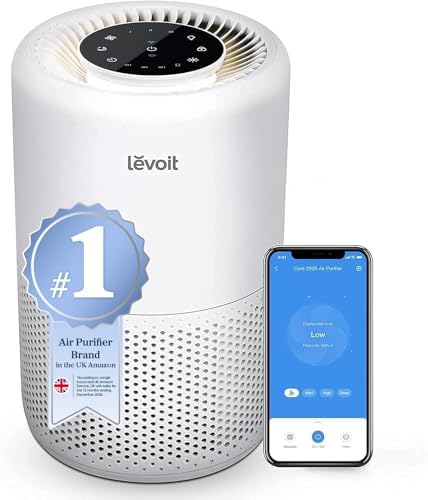
- 【#𝟭 𝗔𝗶𝗿 𝗣𝘂𝗿𝗶𝗳𝗶𝗲𝗿 𝗕𝗿𝗮𝗻𝗱】: Levoit has sold over 6.5 million products worldwide, available in 35 countries and regions, and...
- 【𝟑 𝐋𝐚𝐲𝐞𝐫 𝐇𝐞𝐩𝐚 𝐅𝐢𝐥𝐭𝐞𝐫】: The three-layer Hepa filter removes most pollutants like dust, pet dander, pollen, smoke, odors, ...
- 【𝐂𝐨𝐯𝐞𝐫 𝟑𝟒㎡ 𝐑𝐨𝐨𝐦 𝐎𝐧𝐜𝐞 𝐚𝐧 𝐇𝐨𝐮𝐫】: The CoreMini uses 360° HEPA technology and three-stage filtration to quickly purify 34 sq...
Comparison of Smart Air Purifiers vs. Traditional Models
In recent years, air purifiers have become an essential household device aimed at improving indoor air quality. While traditional models have served their purpose effectively, smart Wi-Fi enabled air purifiers are gaining popularity for their enhanced capabilities. This section explores various factors, including effectiveness, ease of use, energy consumption, and maintenance, to highlight the advantages of smart air purifiers.
Effectiveness remains a crucial criterion when comparing these two types of air purifiers. Traditional models typically rely on HEPA filters alone, which are effective in capturing larger particles such as dust and pollen. However, smart air purifiers often integrate advanced technologies like activated carbon filters and UV-C light, allowing them to eliminate not just larger particles but also smaller pollutants, allergens, and even bacteria. A recent study indicated that some smart models could cleanse the air of up to 99.97% of pollutants, demonstrating a marked improvement over the traditional counterparts.
Ease of use is another distinguishing factor. Unlike traditional air purifiers that require manual adjustments and monitoring, smart Wi-Fi air purifiers can be controlled through mobile applications. Users can adjust settings remotely, set schedules, and receive notifications when filters need replacing. This feature greatly enhances user experience and convenience. Moreover, integration with smart home systems allows for seamless automations, further simplifying air quality management.
Regarding energy consumption, smart air purifiers typically operate more efficiently than traditional models. Due to their advanced sensors, these devices can automatically adjust their operation based on real-time air quality readings, ensuring they run only when necessary, thereby reducing energy usage. In fact, comparative studies show that smart air purifiers can save up to 30% more energy compared to traditional models.
Lastly, maintenance is a critical consideration. Traditional air purifiers often require frequent filter changes and cleaning, which can be cumbersome. Conversely, many smart air purifiers come equipped with maintenance alerts that inform users when filters need attention, thus optimizing maintenance routines. This not only ensures consistent performance but also extends the lifespan of the device.
Top Energy-Efficient Smart Wi-Fi Air Purifiers on the Market
As consumers increasingly prioritize air quality, energy-efficient smart Wi-Fi air purifiers have become essential household items. Below is a curated list of some of the best options available today, highlighting key features, pricing, and what sets them apart in terms of performance and efficiency.
1. Dyson Pure Cool Link TP01 – Priced at approximately $499, this air purifier combines a fan and purification system to eliminate allergens and pollutants. Its Wi-Fi connectivity allows users to control the device remotely via the Dyson Link app. The HEPA filter is capable of capturing 99.97% of particles, making it a top-performing option.
2. Honeywell HPA250B – Retailing for around $299, this air purifier is designed for large rooms and features smart technology compatibility. It uses a three-stage filtration system, including a HEPA filter that effectively traps microscopic allergens. The Honeywell app provides air quality updates and purification controls, enhancing user convenience.
3. Levoit Core 400S – Available for about $199, the Levoit Core 400S is an energy-efficient model well-suited for medium to large spaces. With a filtration system that includes a HEPA filter, this device eliminates 99.97% of airborne particles. Its built-in Alexa and Google Assistant compatibility, along with an intuitive app, allows for seamless monitoring and control.
4. Coway AP-1512HH – Priced at $229, this purifier is celebrated for its efficient energy consumption and quiet operation. The Coway AP-1512HH features a four-stage filtration process and an air quality indicator to monitor the environment in real time. The device's compact design makes it a fantastic choice for urban living spaces.
5. Blueair Blue Pure 211+ – Offered at a competitive price of $299, it boasts a minimalist design and potent purification capabilities. With its unique combination of mechanical and electrostatic filtration, the Blue Pure 211+ captures large particles and gases, effectively improving indoor air quality. Its energy-efficient operation ensures minimal impact on electricity bills.
These options reflect the growing trend toward energy-efficient smart technology in air purification. By reviewing these models, consumers can make informed decisions that enhance their living environments while considering cost-effectiveness and performance efficiency.
- SMART SENSING FOR CLEANER, CONTROLLED AIR – A built-in particle sensor continuously monitors indoor air quality and adju...
- SUITABLE FOR ALLERGY-SENSITIVE HOUSEHOLDS – Designed to support a healthier environment, this model has been acknowledge...
- CLEAN AIR FOR SMALL SPACES, FAST – With a verified CADR of 120.1 m³/h, the Airmega 50 efficiently cleans rooms up to 25 ...
User Experiences and Reviews
Customer feedback on energy-efficient smart Wi-Fi air purifiers highlights a diverse array of experiences, reflecting both satisfaction and areas for improvement. Many users commend these devices for their effectiveness in improving indoor air quality. Reviewers have noted significant reductions in allergens, dust, and even odors, attributing this to the advanced filtration systems these purifiers employ. The integration of smart technology is another frequently praised feature, allowing users to control the device remotely via smartphone applications.
Ease of use is a common theme among positive reviews. Many customers appreciate the intuitive interfaces and set-up processes, which often take just minutes. Individuals have expressed satisfaction with the ability to monitor air quality in real-time, adjusting settings as needed to ensure optimal performance. Furthermore, the energy efficiency of these models has garnered positive remarks, with users reporting lower energy costs on their utility bills when compared to traditional air purifiers.
However, not all feedback is overwhelmingly positive. Some users have raised concerns regarding the initial cost of smart Wi-Fi air purifiers, suggesting that while they might save money in the long run, the upfront financial commitment can be a barrier. Additionally, a few reviewers have encountered connectivity issues, specifically with the applications used to control the devices remotely. In certain instances, users reported challenges with the purifiers not responding to commands sent via their smartphones, which can be frustrating for consumers seeking seamless operation.
In conclusion, user experiences with energy-efficient smart Wi-Fi air purifiers are largely positive, with many highlighting their effectiveness and ease of use. Nevertheless, potential buyers should consider both the advantages and occasional drawbacks noted in reviews to make an informed purchasing decision.
Installation and Maintenance Tips for Optimal Performance
To ensure that your smart Wi-Fi air purifier delivers optimal performance, effective installation and regular maintenance are essential. Start by selecting an ideal location for the unit. Positioning your air purifier in a central space, away from walls and obstructions, will maximize airflow and purification efficiency. Ensure the device is placed on a stable surface and close to a power outlet for convenient cord management. While installing, remember to connect to your home Wi-Fi network following the user manual instructions to enable the smart features seamlessly.
Cleaning is a vital component of maintenance for air purifiers. Dust and dirt can accumulate on the exterior and the air intake. For exterior surfaces, use a damp, soft cloth to wipe them down regularly to prevent dirt buildup. Internally, the filters are critical in the purification process. Depending on the model and the manufacturer's guidelines, check filters monthly for cleanliness. Typically, HEPA filters should be replaced every 6 to 12 months, while pre-filters may need changing more frequently. Assessing filter condition is crucial; a clogged filter forces the air purifier to work harder, consuming more energy and decreasing its effectiveness.
To maximize energy efficiency, utilize the smart features available in many modern air purifiers. Schedule operational times based on your routine to avoid running the device excessively when not needed. Additionally, monitor air quality through the app connected to your smart air purifier. It will provide insights on when to activate the unit based on environmental conditions. Periodically resetting the smart system to recalibrate sensors may also enhance performance. By following these installation and maintenance tips, you will ensure that your clean air solution remains efficient, functional, and energy-conscious.
The Environmental Impact of Choosing Energy-Efficient Products
In an era where ecological awareness is becoming increasingly prominent, the choice of energy-efficient products plays a critical role in promoting sustainability. Devices like smart Wi-Fi air purifiers stand at the forefront of this trend, enabling consumers to not only improve indoor air quality but also reduce their environmental footprint. The integration of energy-efficient technologies in home appliances is not merely a passing fad, but rather a significant shift in consumer behavior that reflects a deeper commitment to environmental stewardship.
Recent studies indicate that consumers are more inclined towards products that are environmentally friendly, reflecting a growing trend towards sustainable purchasing habits. As awareness around climate change, air pollution, and energy consumption rises, more individuals are seeking out devices that consume less energy while still delivering effective performance. Energy-efficient products, such as smart air purifiers, exemplify this demand—they not only utilize less electricity but often come equipped with advanced features that maximize their operational efficiency.
Choosing energy-efficient gadgets contributes to a larger ecological movement. By purchasing products designed to use less energy, consumers can significantly lower overall energy consumption, thereby decreasing greenhouse gas emissions associated with electricity generation. Additionally, many manufacturers are now embracing sustainable production practices, which include utilizing recyclable materials and reducing waste. This holistic approach underlines the importance of considering the entire lifecycle of a product—from its creation to its eventual disposal.
As society pivots towards a greener future, the impact of energy-efficient products like smart air purifiers becomes increasingly significant. The collective choice of consumers to prioritize these items can foster advancements in technology, promote eco-friendly practices, and ultimately contribute to a sustainable future for generations to come.

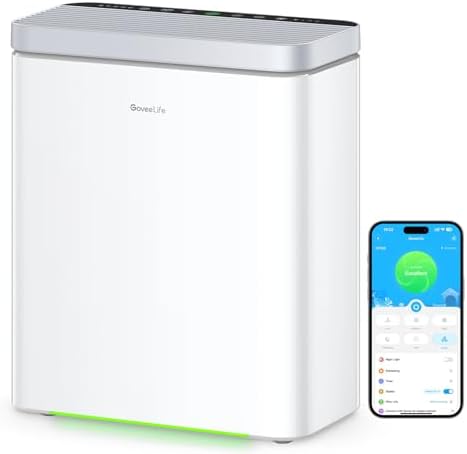
- 🏠【𝗜𝗱𝗲𝗮𝗹 𝗳𝗼𝗿 𝗔𝗹𝗹 𝗦𝗽𝗮𝗰𝗲𝘀 】The PJ07 Air Purifier features a high-efficiency filtration system and 360° air intake design. W...
- 🐶【𝐏𝐞𝐭-𝐟𝐫𝐢𝐞𝐧𝐝𝐥𝐲 𝐀𝐢𝐫 𝐏𝐮𝐫𝐢𝐟𝐢𝐞𝐫】The Pet Air Purifier is specially designed for pet-friendly homes, tackling the unique air q...
- 🧽【𝗛𝗶𝗴𝗵-𝗘𝗳𝗳𝗶𝗰𝗶𝗲𝗻𝗰𝘆 𝗙𝗶𝗹𝘁𝗿𝗮𝘁𝗶𝗼𝗻】This home air purifier features a True H13 HEPA filter with a 3-stage high-efficiency filtr...
Conclusion: The Future of Air Purification Technology
As we reflect on the advancements in air purification technology, it becomes increasingly clear that energy-efficient solutions are crucial for promoting both individual health and environmental sustainability. Energy-efficient smart Wi-Fi air purifiers represent a significant leap forward in creating cleaner indoor spaces while minimizing energy consumption. By employing technologies that optimize air filtration processes, these devices not only enhance air quality but also reduce waste and energy usage.
Looking to the future, we can speculate on several potential innovations within the field of air purification. Advances in smart technology, such as improved machine learning algorithms, could lead to air purifiers that adapt in real time to varying air quality conditions, automatically adjusting their filtration intensity based on detected pollutants. Furthermore, the integration of renewable energy sources, such as solar power, could make air purifiers even more sustainable, ensuring that the devices operate efficiently without contributing to energy consumption burdens.
Moreover, as IoT technology continues to evolve, it may become possible for smart air purifiers to connect with other home systems, creating a fully integrated environment that optimizes air quality in tandem with energy use, heating, and cooling systems. This synergy not only promotes a healthier living atmosphere but also enhances energy efficiency throughout the home.
Given the increasing air quality challenges that urban and suburban populations face, it is vital for consumers to consider adopting these innovative air purification technologies. By investing in energy-efficient smart Wi-Fi air purifiers, individuals can take proactive steps toward ensuring a healthier home environment and contribute to broader efforts in combating climate change. As technology progresses, our capacity to harness clean air for a safe and sustainable future will undoubtedly continue to improve.



0 Comments